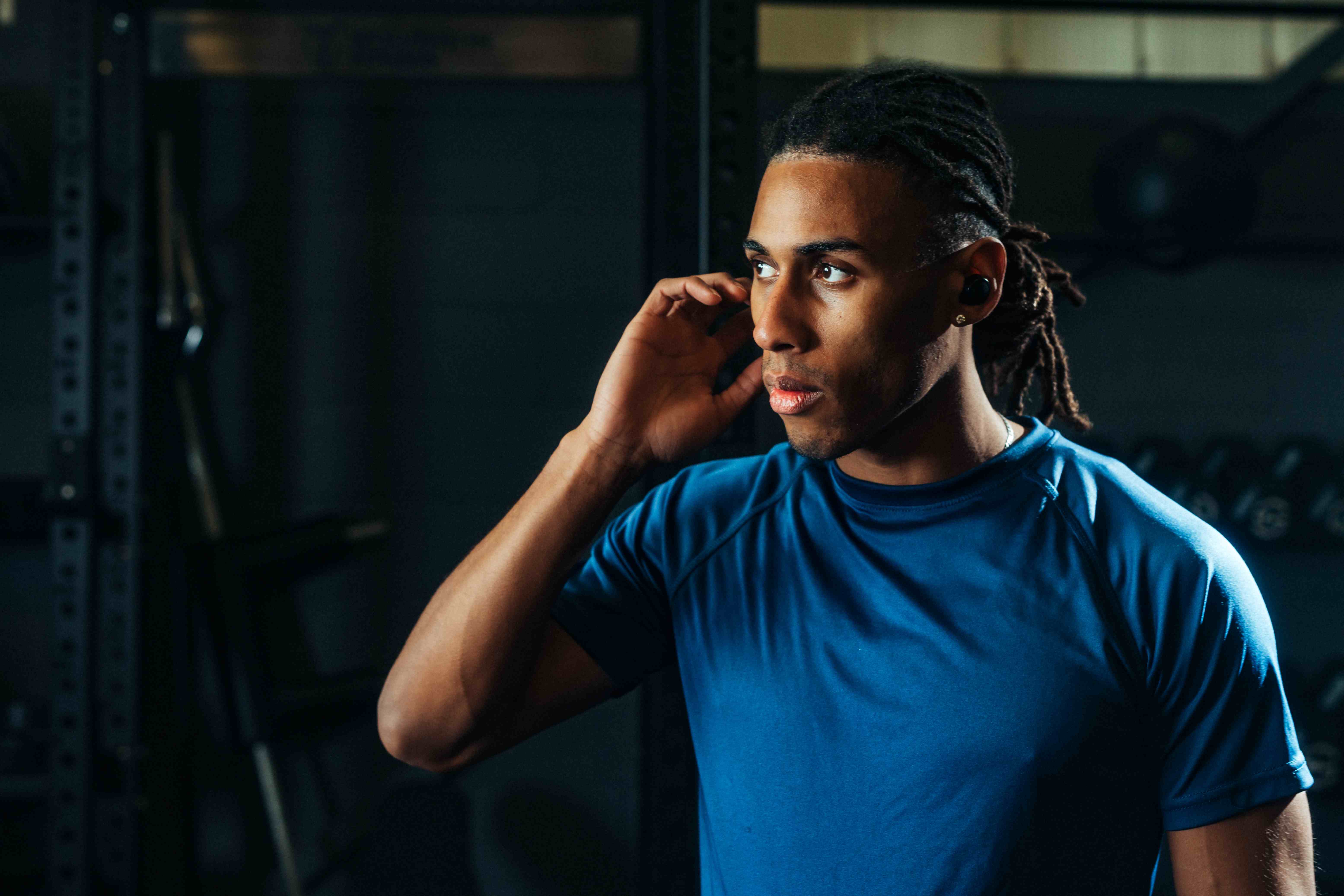

Choosing between earbuds vs smartwatch for gym music comes down to one question: what gets sound into your ears without dragging a phone through every set? Plenty of athletes want to train phone-free but assume their music has to stay tied to a handset. It doesn't. This guide breaks down how earbuds and smartwatches each store and play your tracks, where each device wins, and which setup keeps your workout music offline and uninterrupted from warm-up to final rep.
How Earbuds and Smartwatches Actually Play Your Music
Here's the detail most comparisons skip: a smartwatch doesn't play music into your ears by itself. It stores tracks, but it still has to stream them over Bluetooth to a separate pair of headphones. So "smartwatch for gym music" really means two devices: the watch plus earbuds.
By contrast, earbuds with an MP3 player built in are both the source and the speaker. The music lives on the earbud itself and plays straight into your ear: no second device, no phone, no app open. That single difference shapes almost everything below.
Earbuds vs Smartwatch for Gym Music: The Head-to-Head

When you line up earbuds vs smartwatch for gym music on the things that matter in a session, the trade-offs get clear fast. Here's the short version before we dig in:
- Devices needed: Smartwatch = 2 (watch + earbuds). Onboard-storage earbuds = 1.
- Music path: Watch relays over Bluetooth; earbuds play direct from the earbud.
- Best extra use: Watch adds heart-rate, GPS and pacing; earbuds keep it simple.
Storage and library size
Modern smartwatches hold a serious library. Entry-level Garmin music watches set aside a few gigabytes for audio, enough for 500-plus songs, while the latest Apple Watch models stretch to tens of gigabytes (Tom's Guide [opens in new tab]). Dedicated earbuds store less on paper: Tzuka's FreedomMode™ holds up to 1,000 songs onboard. For a single gym session, both hold far more than you'll ever cycle through.
Sound, fit and sweat resistance
A watch can't improve what reaches your ears; that's entirely down to the headphones it pairs with. Earbuds skip the relay, so there's no second Bluetooth hop to add lag or drop a beat mid-set. For sweaty, high-impact training, a secure sport fit and a proper sweat rating matter far more than any number on a wrist.
Convenience during training
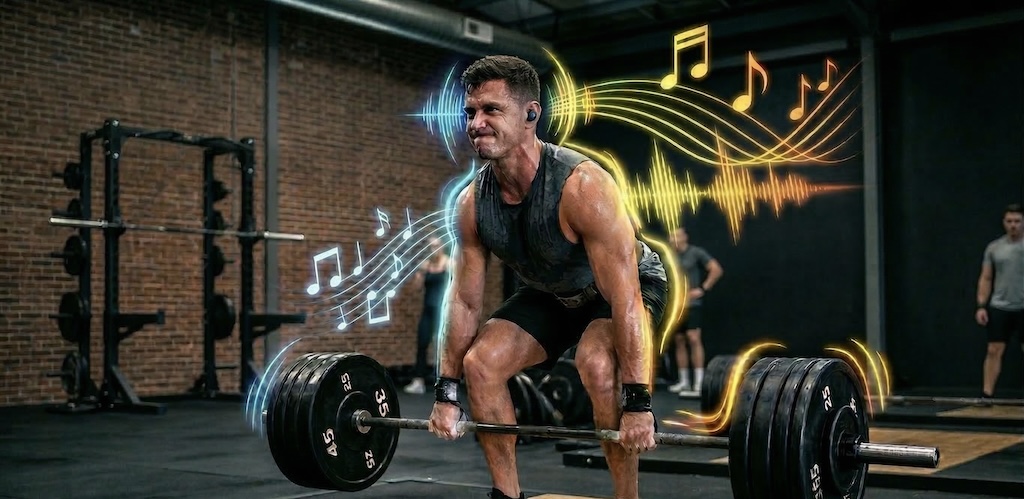
On a barbell, a wrist device gets in the way; plenty of lifters take a watch off before heavy sets. Earbuds stay put. And with no phone in the mix, there's nothing to drop, smash, or glance at between rounds. If your real goal is genuine phone-free workout earbuds, a self-contained earbud removes the most failure points.
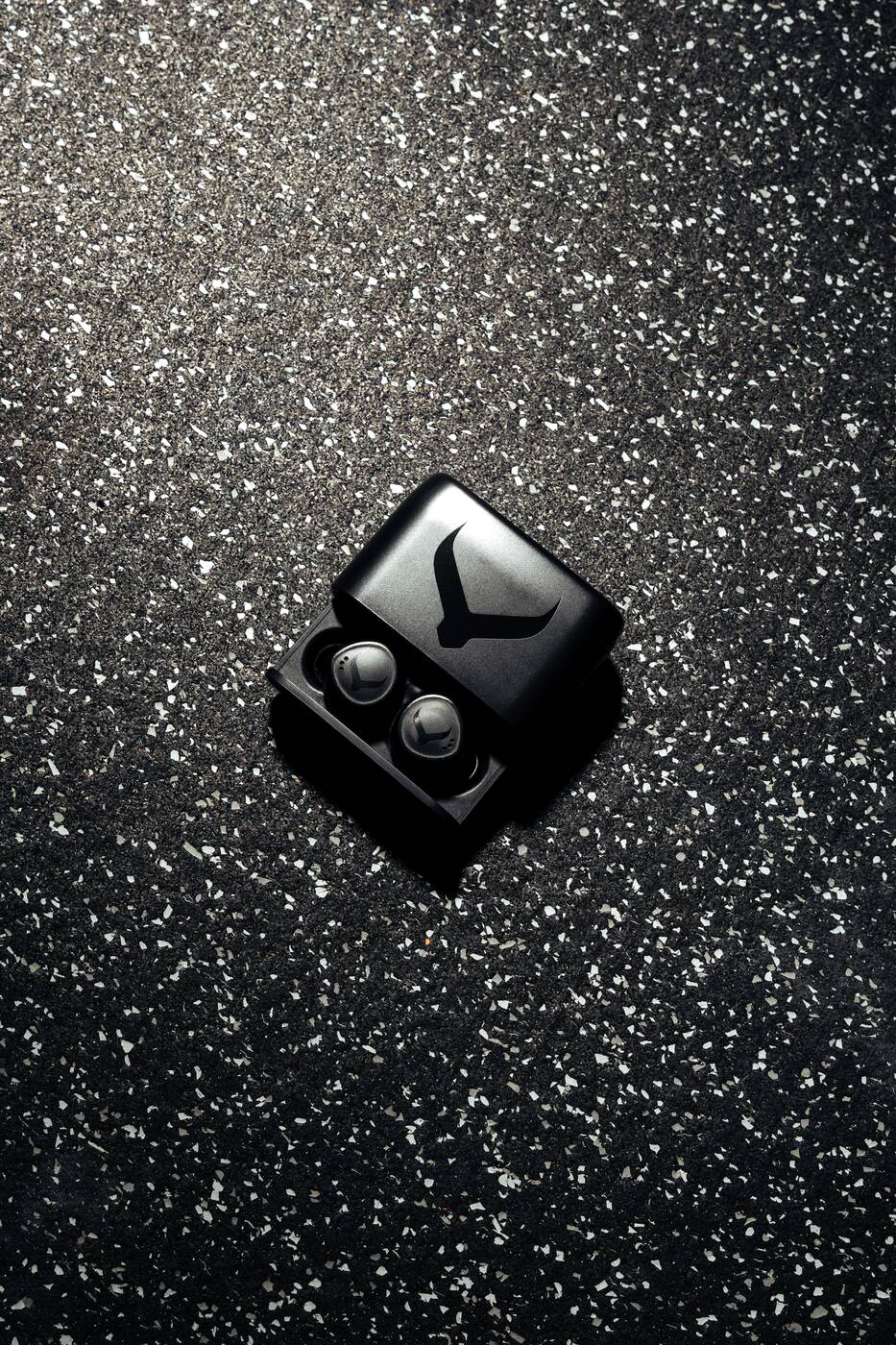
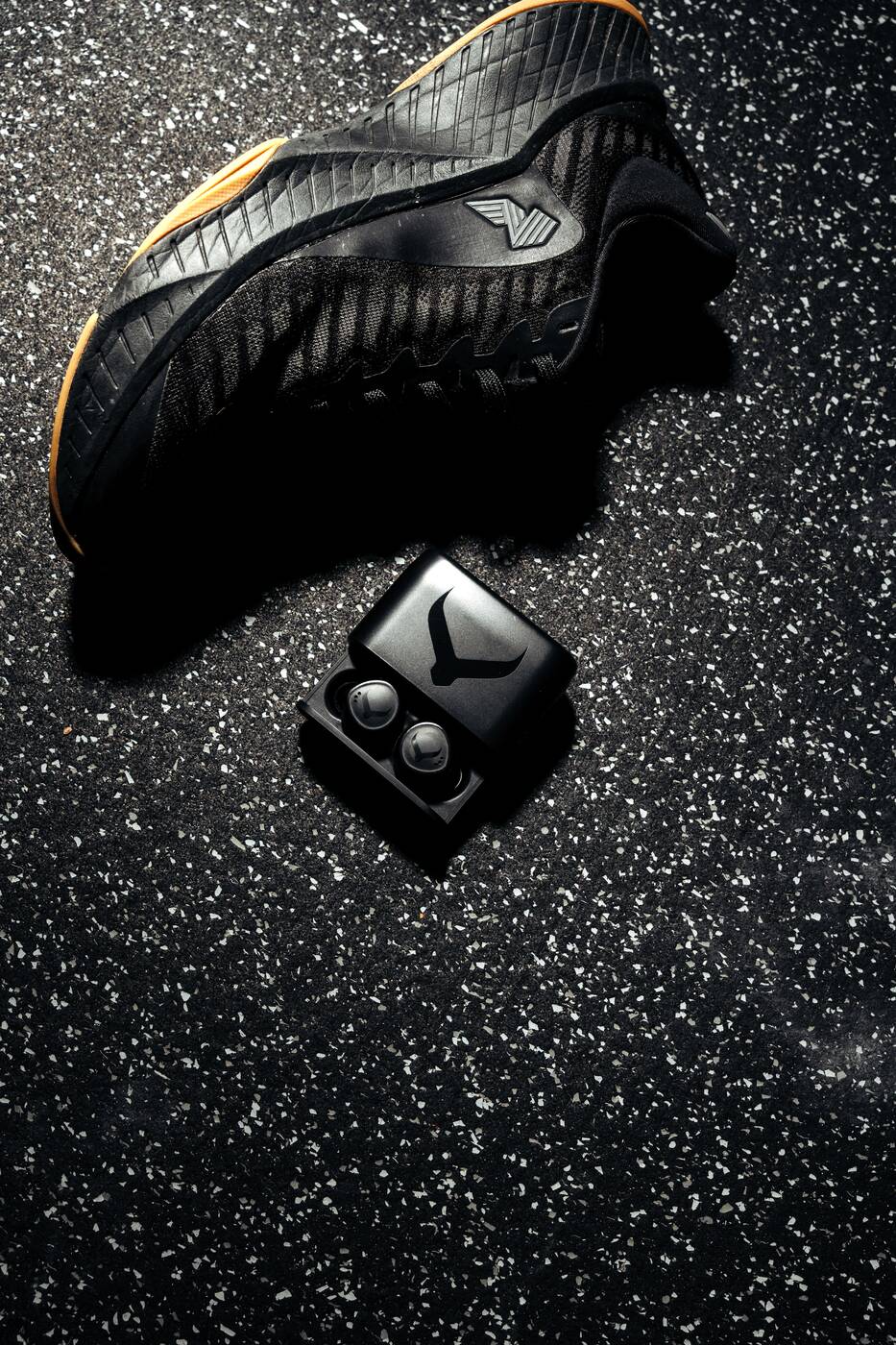
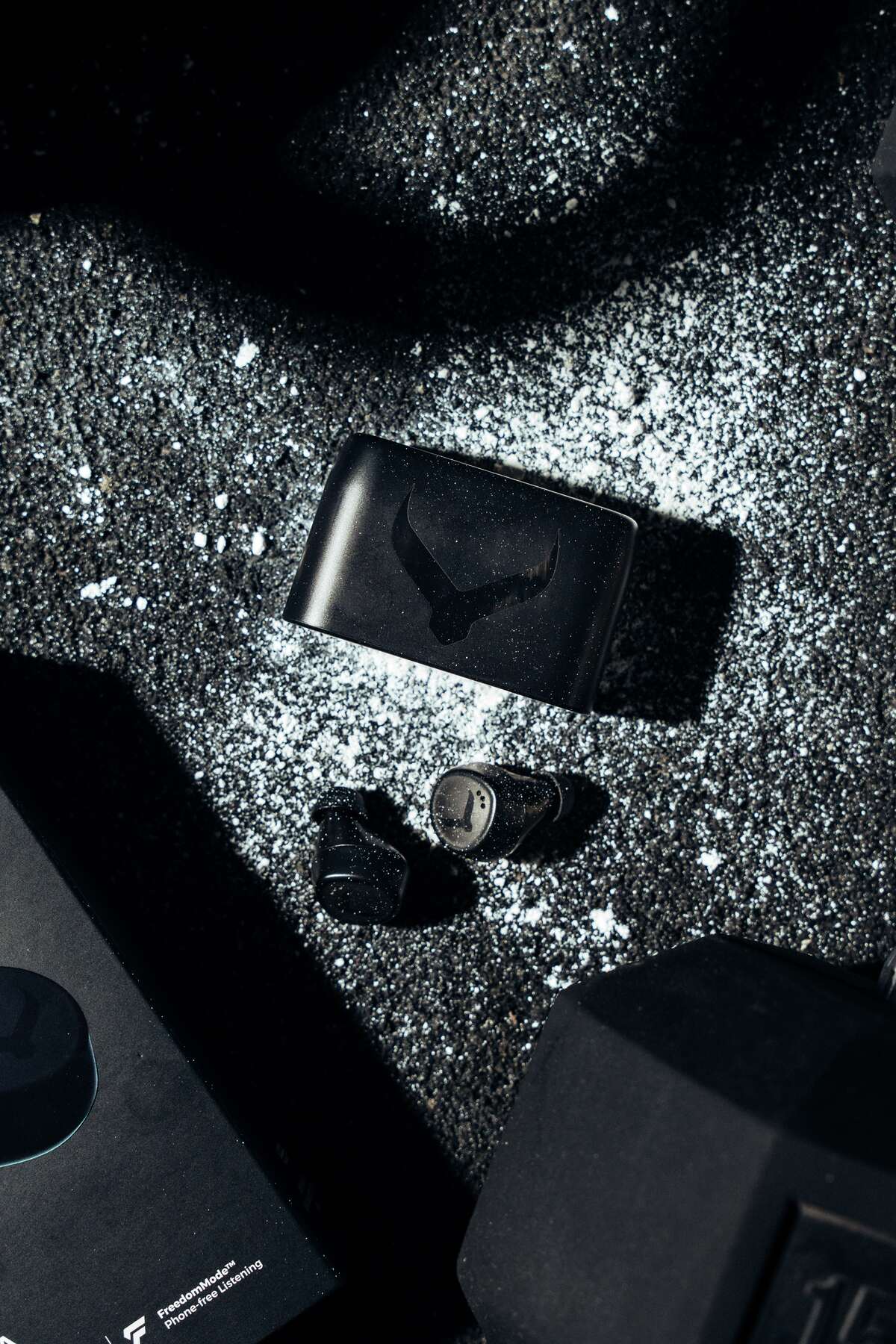
Curious how a single-device setup feels in training? See how the Tzuka TZ7 Ultra earbuds load your whole library and leave the phone in the locker.
When a Smartwatch Still Makes Sense
None of this makes a smartwatch the wrong call. If you already wear one for heart-rate, GPS or HYROX pacing, adding offline music is almost free. Watches also win when you want live streaming or quick playlist swaps between sessions. One catch worth checking: many Garmin watches don't support Apple Music natively (Garmin Support [opens in new tab]), so confirm your service is covered before you rely on it.
Why Offline Music Earbuds Suit the Gym Best

For pure gym use, offline music earbuds answer the brief more directly. One device, music straight into your ears, nothing to relay and nothing extra to recharge. You load your workout music offline once, then forget about signal, apps and notifications for the rest of the week. That's the case for treating the earbud, not the wrist, as your gym music device. If you've already gone phone-free elsewhere in your training, it's the natural next step; here's our wider take on offline music earbuds.
Frequently Asked Questions
Can a smartwatch play music without earbuds?
Not into your ears. Most smartwatches have no usable built-in speaker for music, so they store tracks and stream them over Bluetooth to a separate pair of headphones. For gym music you'll still need earbuds, meaning two devices, two batteries and one extra Bluetooth connection to manage during your session.
Do you still need a phone with offline music earbuds?
No. Earbuds with onboard storage, like Tzuka's FreedomMode™, hold the music on the earbud itself and play it back without any phone, app or signal. You load your library once via sync, then train completely phone-free. Many models still let you reconnect to a phone for streaming whenever you want the option.
Which holds more music, a smartwatch or earbuds?
On paper, high-end smartwatches often hold more: some Apple Watch models reach tens of gigabytes. But onboard-storage earbuds such as the TZ7 Ultra still carry up to 1,000 songs, which is far more than any single workout needs. For gym use, capacity rarely decides it; how the music reaches your ears matters more.
Are earbuds or a smartwatch better for HYROX training and gym classes?
For busy training sessions, fewer devices win. HYROX forbids headphones during competition, so this applies to training only. Crowded venues overwhelm Bluetooth and mobile networks, so a self-contained earbud playing offline is the most reliable choice. A smartwatch still works if you already wear one for pacing, but it adds a second device and another wireless link that can drop out exactly when the room is busiest.
The Verdict
When it comes to earbuds vs smartwatch for gym music, the honest answer depends on what else you carry. A smartwatch shines if you already wear one and want music as a bonus feature. But for the simplest, most reliable gym setup (one device, no phone, music straight into your ears), onboard-storage earbuds win. Less to charge, less to drop, and nothing standing between you and your next set.
Ready to leave the phone in the locker? Load up to 1,000 songs and train uninterrupted with the Tzuka TZ7 Ultra and FreedomMode™, earbuds built for phone-free training.
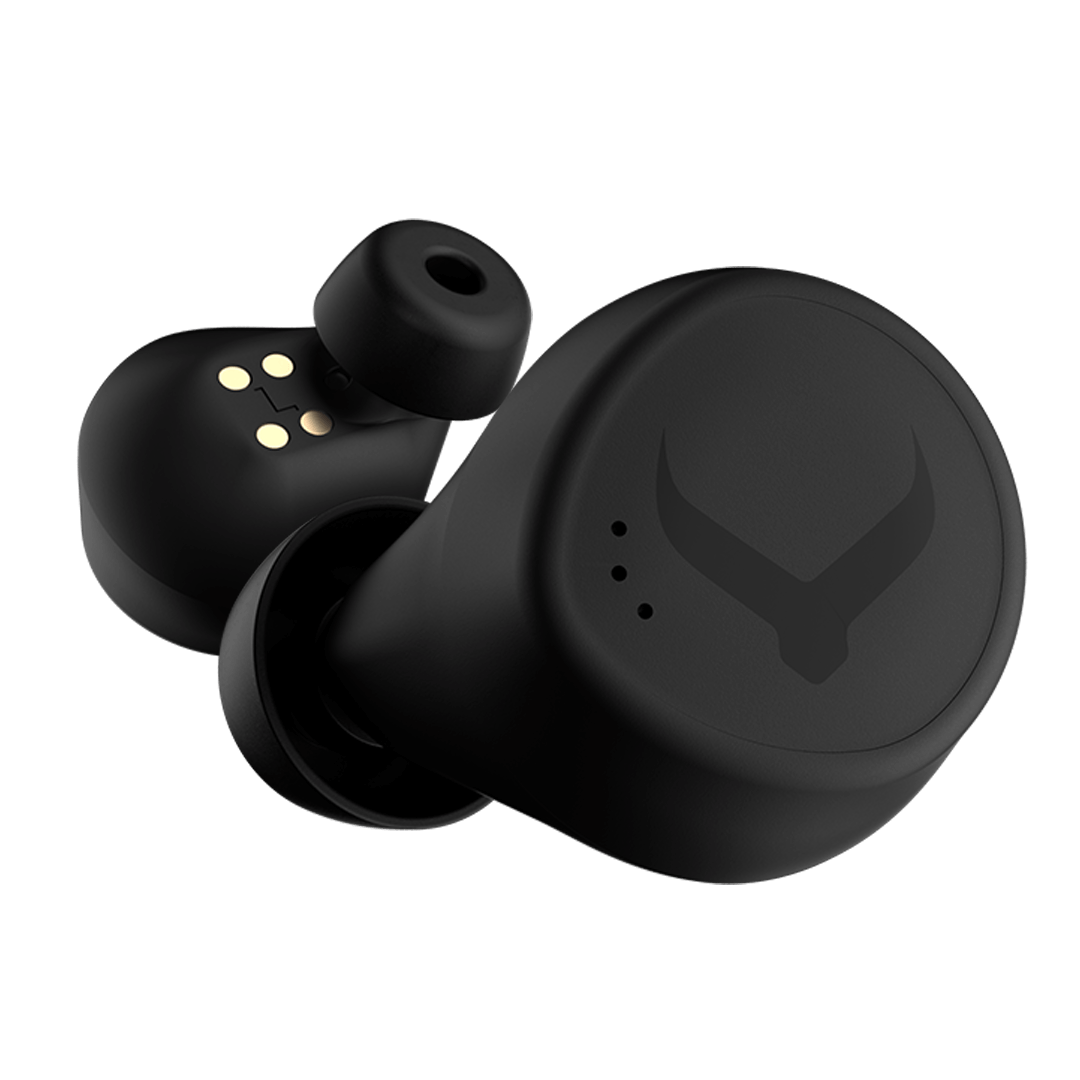
Introducing the ultimate workout earbuds.



















.jpg)


.jpg)



.avif)
.avif)