Best Earbuds for HYROX Training in 2026
HYROX forbids headphones in competition, in singles and doubles alike, which makes earbuds a training tool rather than a race tool. Your race is ninety minutes and your training block is four months. Five current earbuds ranked on fit retention, ingress protection, battery and phone independence, with every specification taken from the manufacturer own documentation.
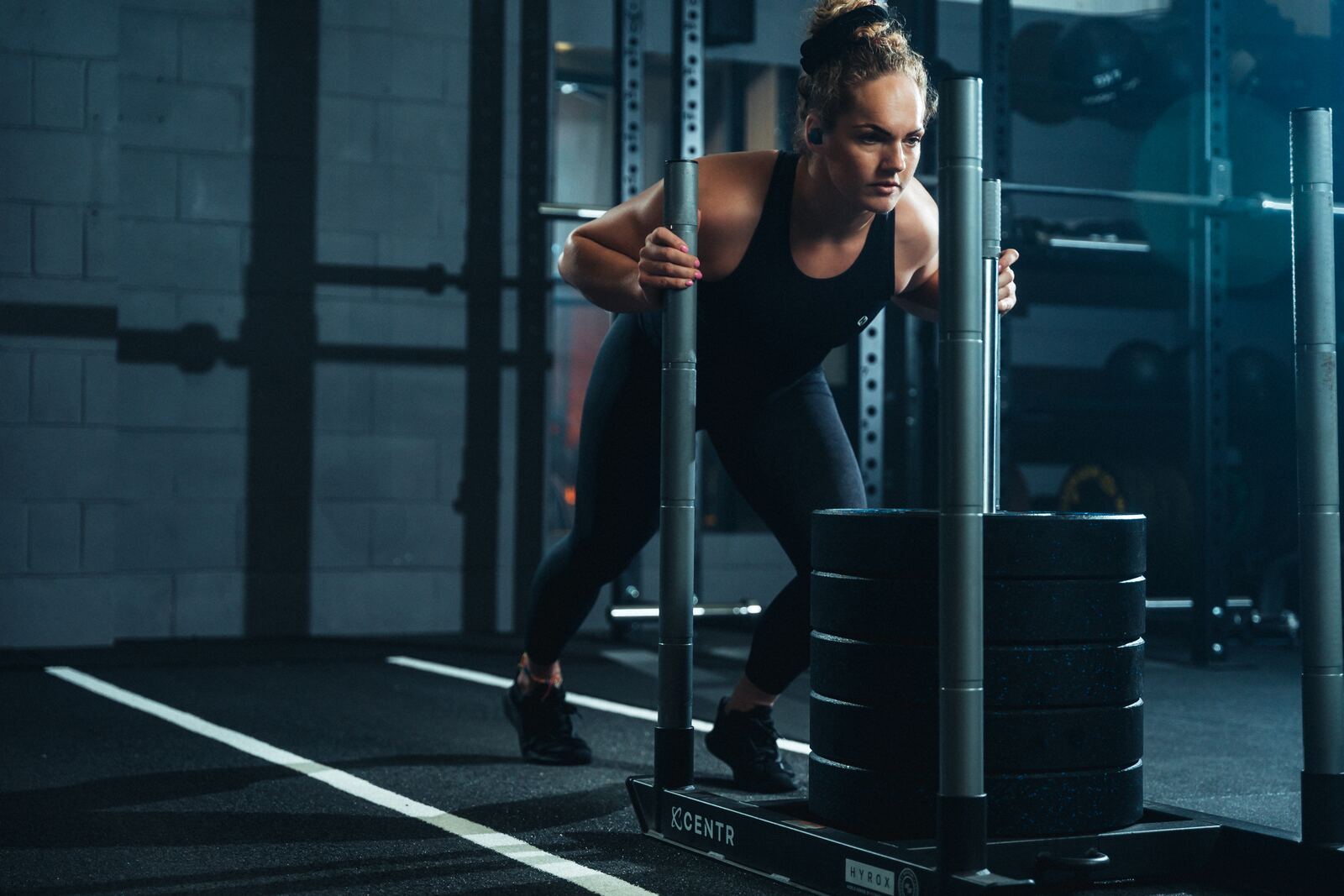

Search for the best earbuds for HYROX training and you will find plenty of lists. Almost none of them mention the one thing that decides how you should actually use them.
HYROX forbids headphones in competition. The Season 26/27 rulebook lists headphones and ear plugs as forbidden items, and the permitted-kit list works as a closed allowlist, so anything not named on it is prohibited by default. There is no bone conduction exception, no open-ear exception, and no single-bud exception. This applies to singles, doubles and relay alike.
That does not make earbuds irrelevant to HYROX. It makes them a training tool rather than a race tool, which is a more useful way to think about them anyway. Your race is ninety minutes. Your training block is four months. This guide ranks the earbuds worth owning for those four months, and for the warm-up area on race morning.
Every specification below comes from the manufacturer's own published documentation. Where a figure is not published, it says so rather than guessing.
What HYROX training actually demands
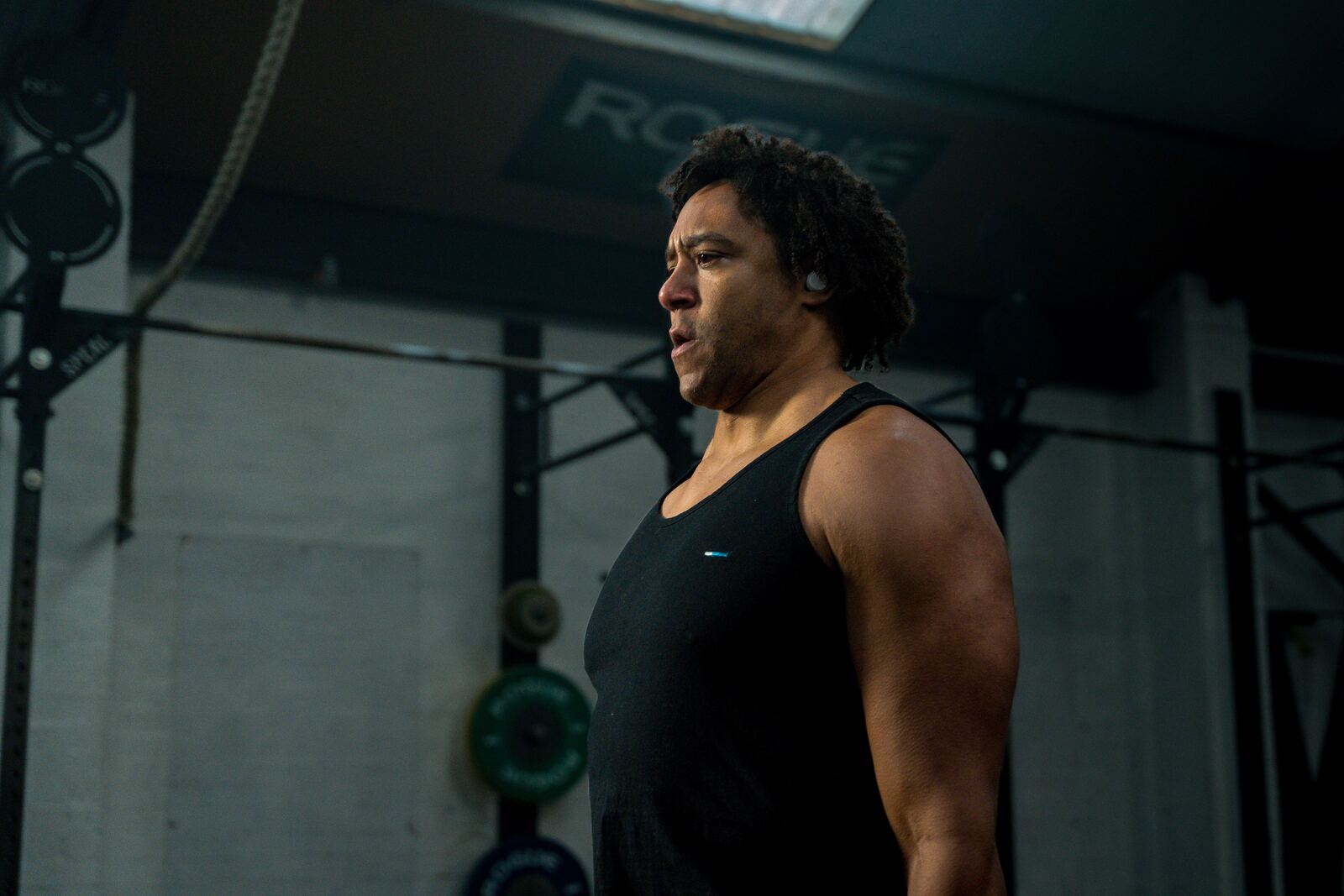
The sport is unusual because it stacks two incompatible demands on the same session. You run eight kilometres and you move heavy implements, alternating, for sixty to a hundred and twenty minutes. Earbuds designed for a commute or a treadmill fail somewhere in the middle.
Four things decide whether a pair survives a training block:
- Fit retention under multi-directional load. A sled push has your head down and your whole body vibrating. Friction fit is not enough. You want a wing, a fin or a hook.
- Ingress protection rated for sweat, not splash. IPX4 is splash resistance. A two-hour simulation session in a warm gym is a sustained saline soak.
- Battery that covers your longest session plus warm-up. Not your average session. Your longest.
- Independence from your phone. Gyms and event halls are among the most wireless-congested places you will train.
1. Tzuka TZ7 Ultra
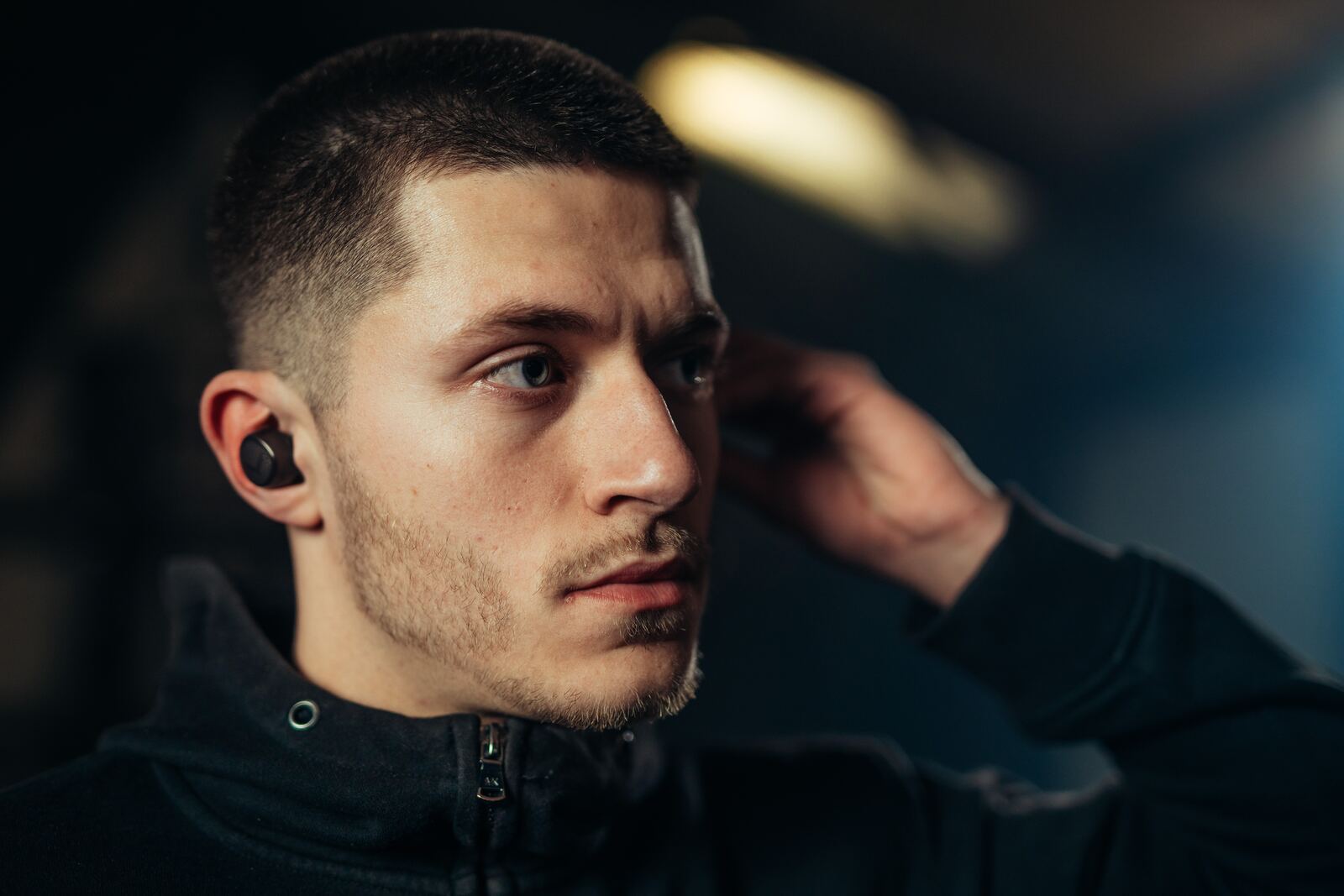
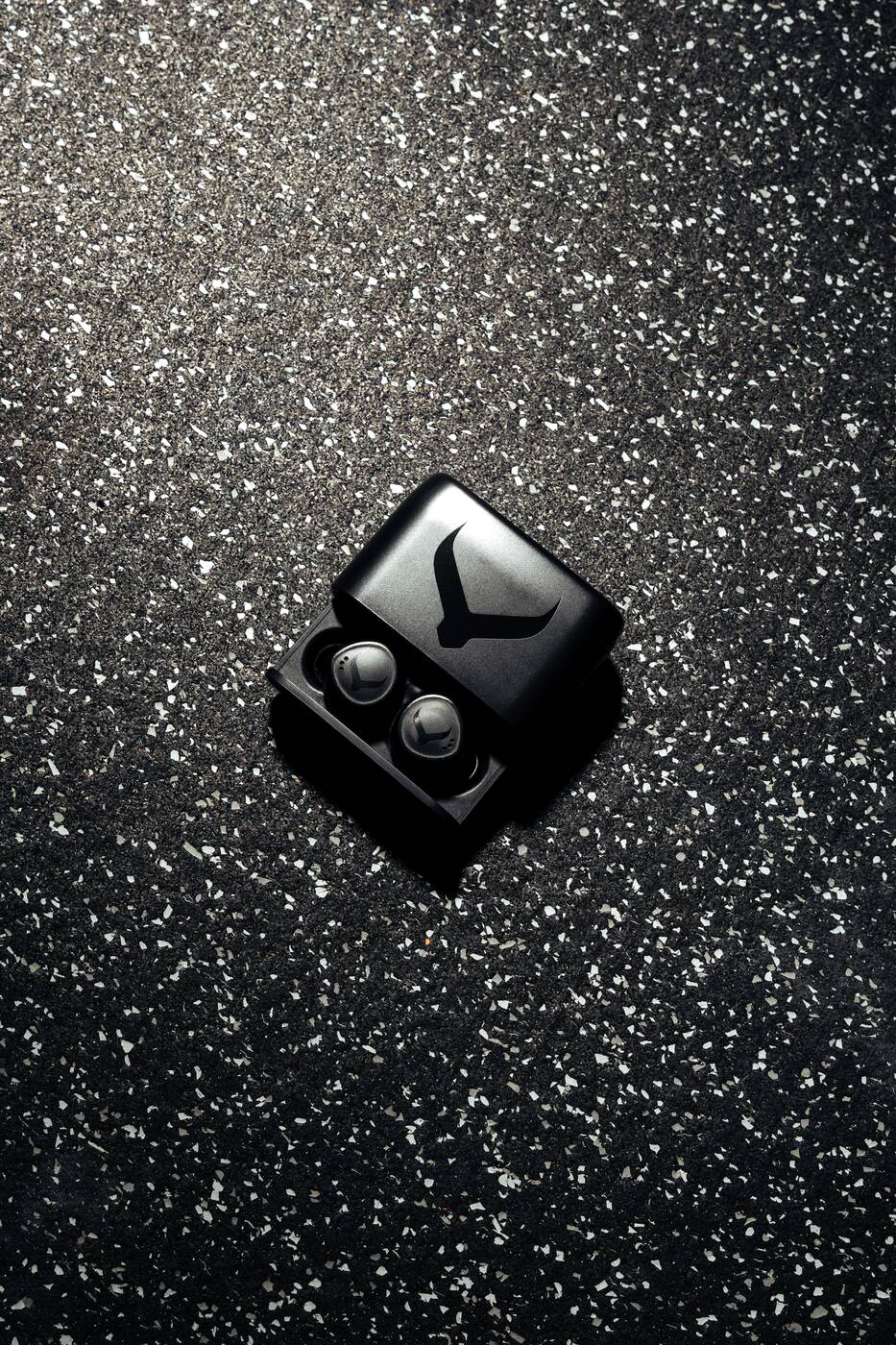
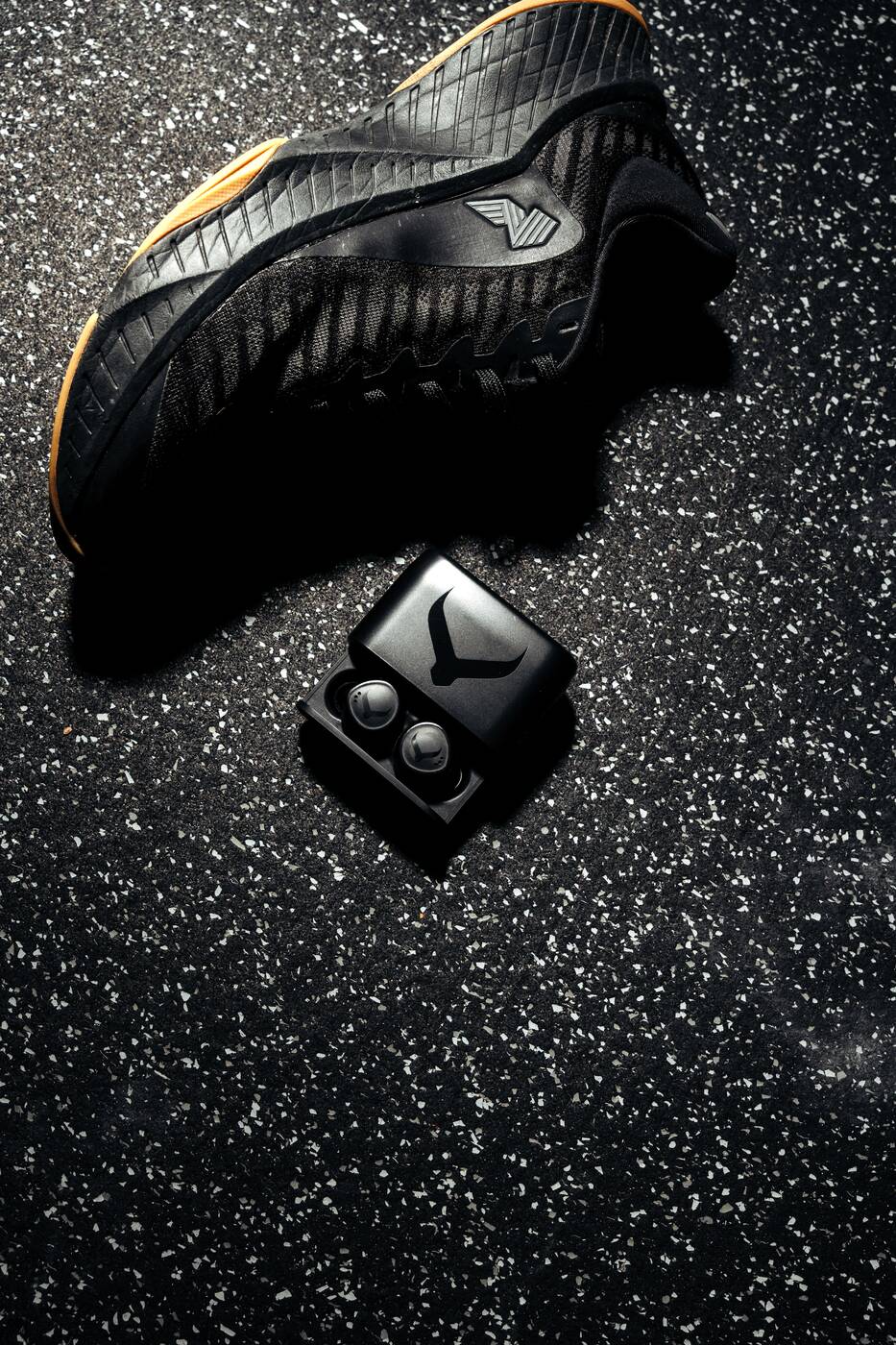
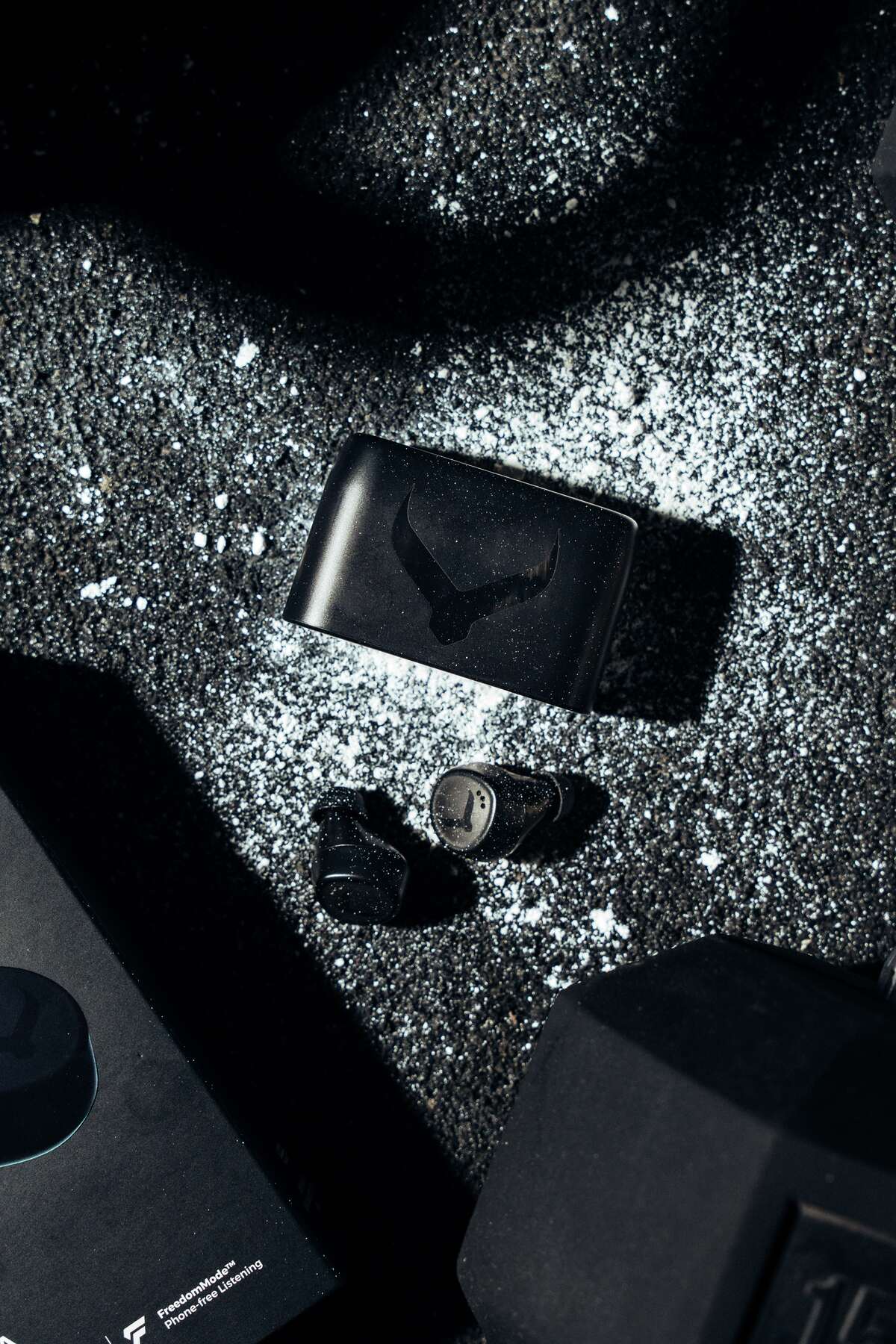
£190 early adopter, £220 RRP. IP68 rated to 2m. 7 hours per earbud, 60 hours with the case. 4GB onboard storage for around 1,000 songs. Bluetooth 5.2. Two metre drop rating onto concrete.
The TZ7 Ultra is the only true wireless earbud in this guide that carries both onboard music storage and Bluetooth. Everything else with onboard storage is a bone conduction band built for swimmers, and everything else that is true wireless needs a phone in the room.
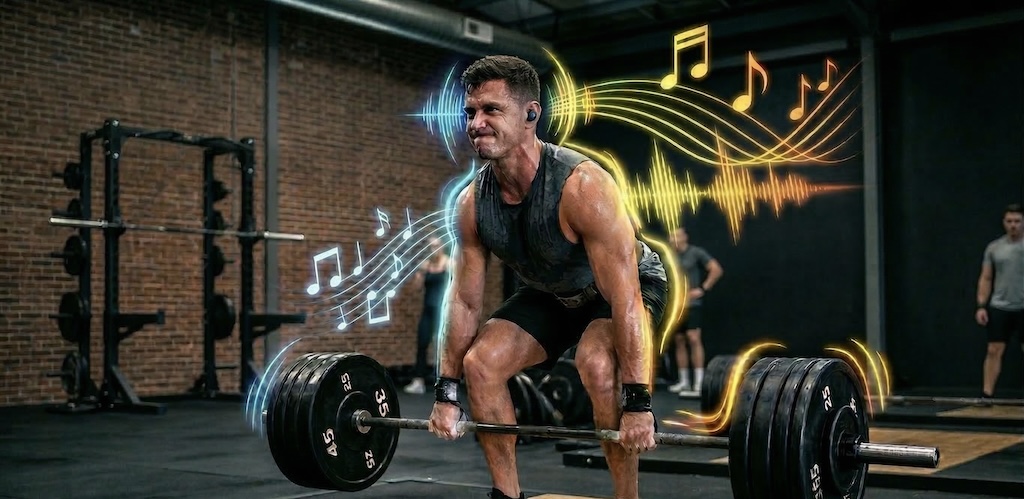
For HYROX training that matters more than it sounds. Compromised running sessions are where the sport is won, and they are exactly the sessions where you least want a phone strapped to your arm or a Bluetooth link fighting thirty other devices for the same band. FreedomMode holds the playlist on the earbud itself, so the session runs whether or not there is signal, a phone or a working connection.
The 60 hour figure with the case is the highest total endurance in this guide. The 7 hour per-earbud figure is mid-table, and worth knowing if you routinely train for longer than that without returning the buds to the case.
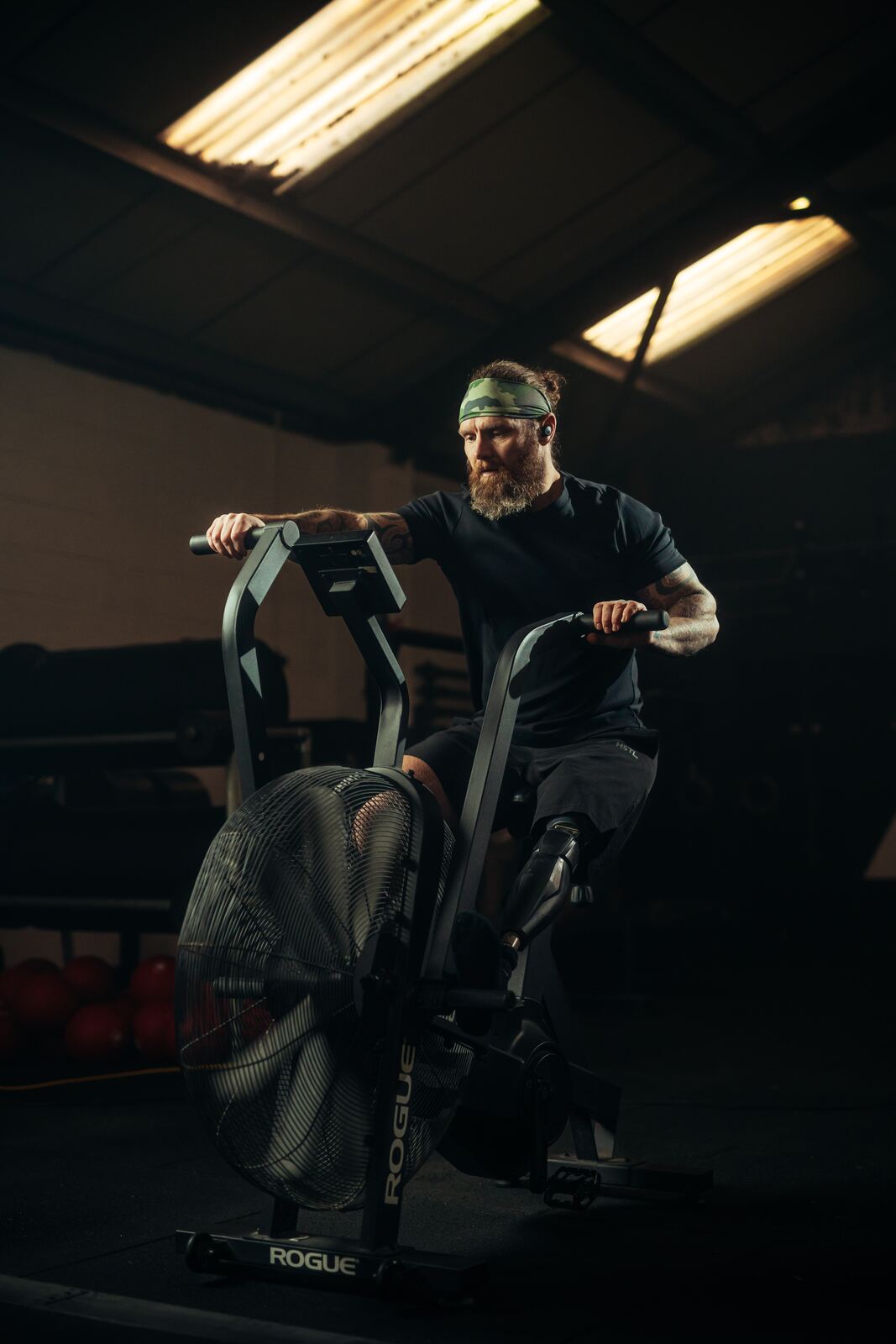
The IP68 rating and the 2m drop rating together are the pairing that matters in a functional fitness gym, where the two ways earbuds die are sweat ingress and being dropped on rubber from head height.
2. Shokz OpenRun Pro 2
£169. IP55. 12 hours per charge. Bone conduction. 30.3g for the whole unit. No onboard storage.
Shokz is the official HYROX partner, and the OpenRun Pro 2 is the pair you will see most often in event warm-up areas. It is worth being precise about what it is: a single bone conduction band, not a pair of earbuds. That has real consequences.
The open-ear design leaves your ear canal clear, which some athletes strongly prefer for gym awareness. Twelve hours per charge is excellent. There is no case, so there is no top-up between sessions, and the IP55 rating is meaningfully below IP68 for sweat exposure over a long training block.
No onboard storage means it needs your phone throughout.
3. Beats Powerbeats Pro 2
£249.99. IPX4 earbuds, no published case rating. 10 hours per earbud, 45 hours with the case. 8.7g per earbud. Ear-hook. No onboard storage.
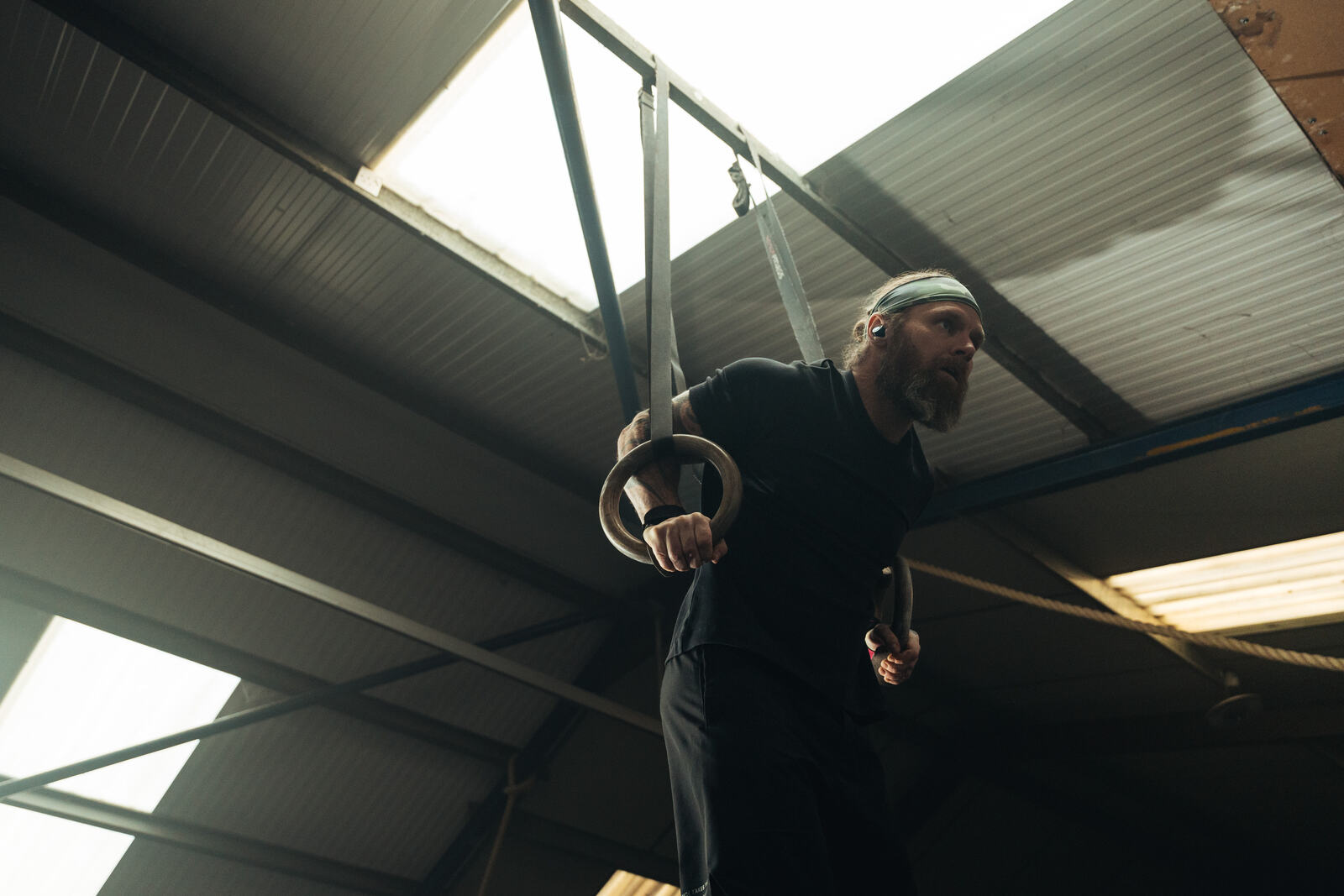
The ear-hook is genuinely good for functional fitness. Fit retention on burpee broad jumps and sled work is among the best here, and 10 hours per earbud is strong.
The problem is the IPX4 rating, which is splash resistance rather than sweat resistance. For a HYROX training block specifically, that is the weakest ingress protection of anything in this guide, and it is the specification most likely to end the product's life early.
4. Anker Soundcore Sport X20
£89.99. IP68 earbuds and IP68 case. 12 hours per earbud, 48 hours with the case. Adjustable ear-hook. No onboard storage.
The best value here by a distance. IP68 on both the earbud and the case is rare at any price and almost unheard of under a hundred pounds. Twelve hours per earbud is genuinely useful for long sessions.
It needs your phone, and the weight per earbud is not published, but on durability specification per pound nothing else in this guide competes.
5. JBL Endurance Race 2
£69.99. IP68 earbuds, IPX2 case. 12 hours per earbud, 48 hours with the case. 6.4g per earbud. Twistlock wing. No onboard storage.
IP68 earbuds at seventy pounds, with a wing fit that holds well, and ten hours of playback even with noise cancelling active. The catch is the case at IPX2, which is barely protected. If your kit bag gets wet, the case is the part that fails.

What we deliberately left out
The Sony WF-SP900 appears on most "offline storage earbuds" lists and has been discontinued for years. The Bose Sport Earbuds were sold from 2020 to 2023 and are no longer current. The original Shokz OpenSwim is now sold refurbished only in the UK. None of these belong in a 2026 guide.
We left out Jaybird entirely. We could not verify from any primary source whether current models are still sold new in the UK, and asserting either way would be guesswork.
How to actually use them across a HYROX block
Base phase. Long aerobic work is where onboard storage earns its keep, because these are the sessions furthest from a reliable signal. Set your playlist and forget it.
Build phase. Compromised running sessions and station circuits. This is the real durability test, and the phase where an IPX4 pair starts to degrade.
Peak and taper. Cadence work to a fixed tempo. Our BPM playlist guide covers how to build one properly.
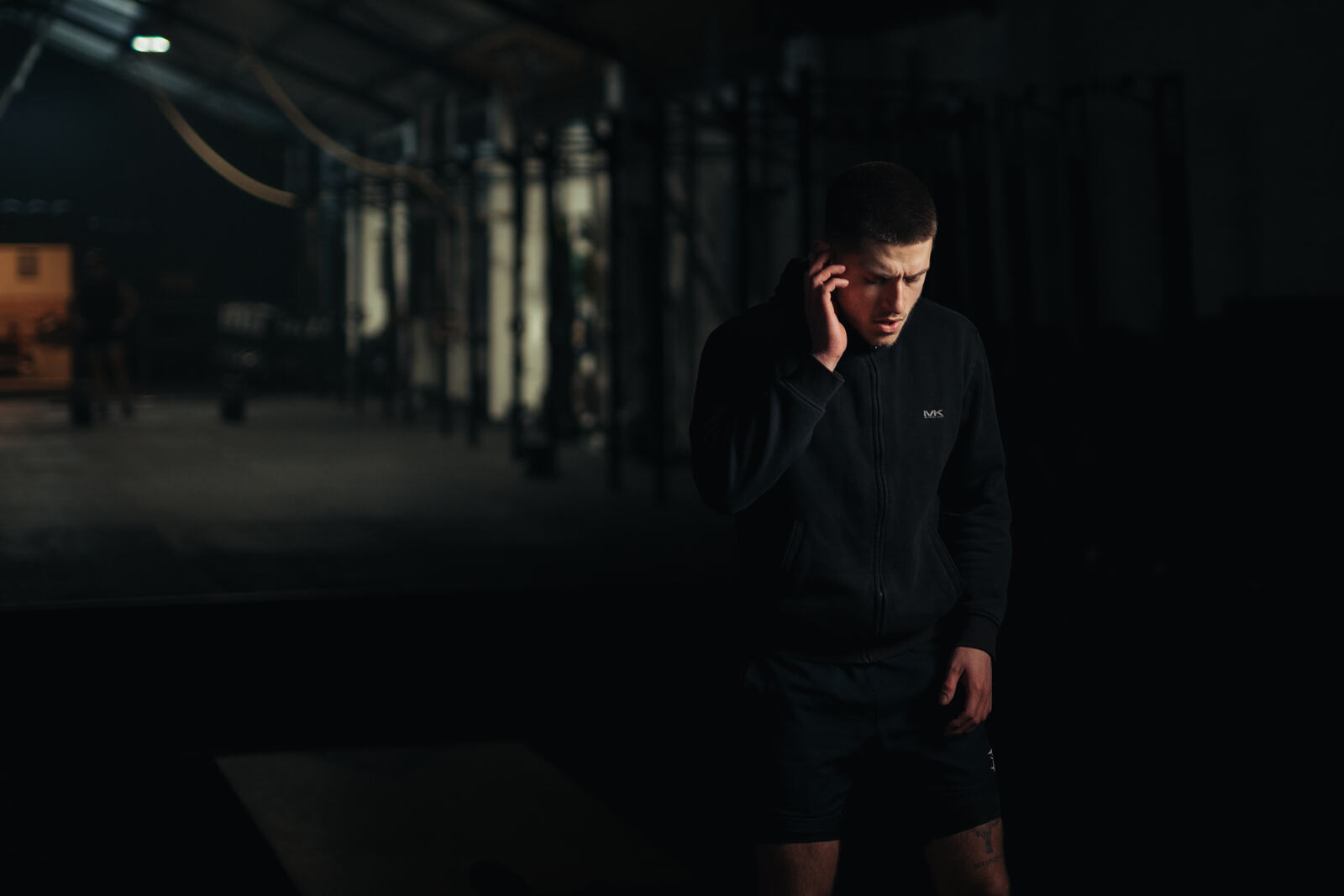
Race morning. Warm-up area only. Run your activation routine, settle your head, then take them out and put them in your bag before the start tunnel. Prohibited kit is confiscated.
What carries into the race is not the music. It is the cadence you drilled to it. If you have trained your run turnover and station rhythm to a fixed tempo for four months, that pacing is internalised by race day and holds without a soundtrack.
FAQ
Can you wear earbuds during a HYROX race?
No. Headphones and ear plugs are both listed as forbidden items in the Season 26/27 rulebook, and the permitted-kit list is a closed allowlist. There is no exception for bone conduction or open-ear designs, and the rule applies to singles, doubles and relay.
What about the warm-up area?
The warm-up area is a designated space open to racers before their wave, and earbuds are fine there. Take them out and bag them before you go to the start tunnel.
Is bone conduction allowed because it is not in-ear?
No. The rulebook says "headphones" without qualification, and separately bans ear plugs, which closes the argument that a device sitting outside the ear canal falls outside the rule.
What battery life do I need for HYROX training?
Enough for your longest session plus warm-up, with headroom. For most athletes that is five to seven hours per earbud. If you train for longer than that without returning the buds to the case, prioritise per-earbud figures over total-with-case figures.
Do I need onboard storage?
Not strictly, but it removes the two most common failure modes in a training block: a phone you have to carry, and a Bluetooth link competing with everyone else in the building.
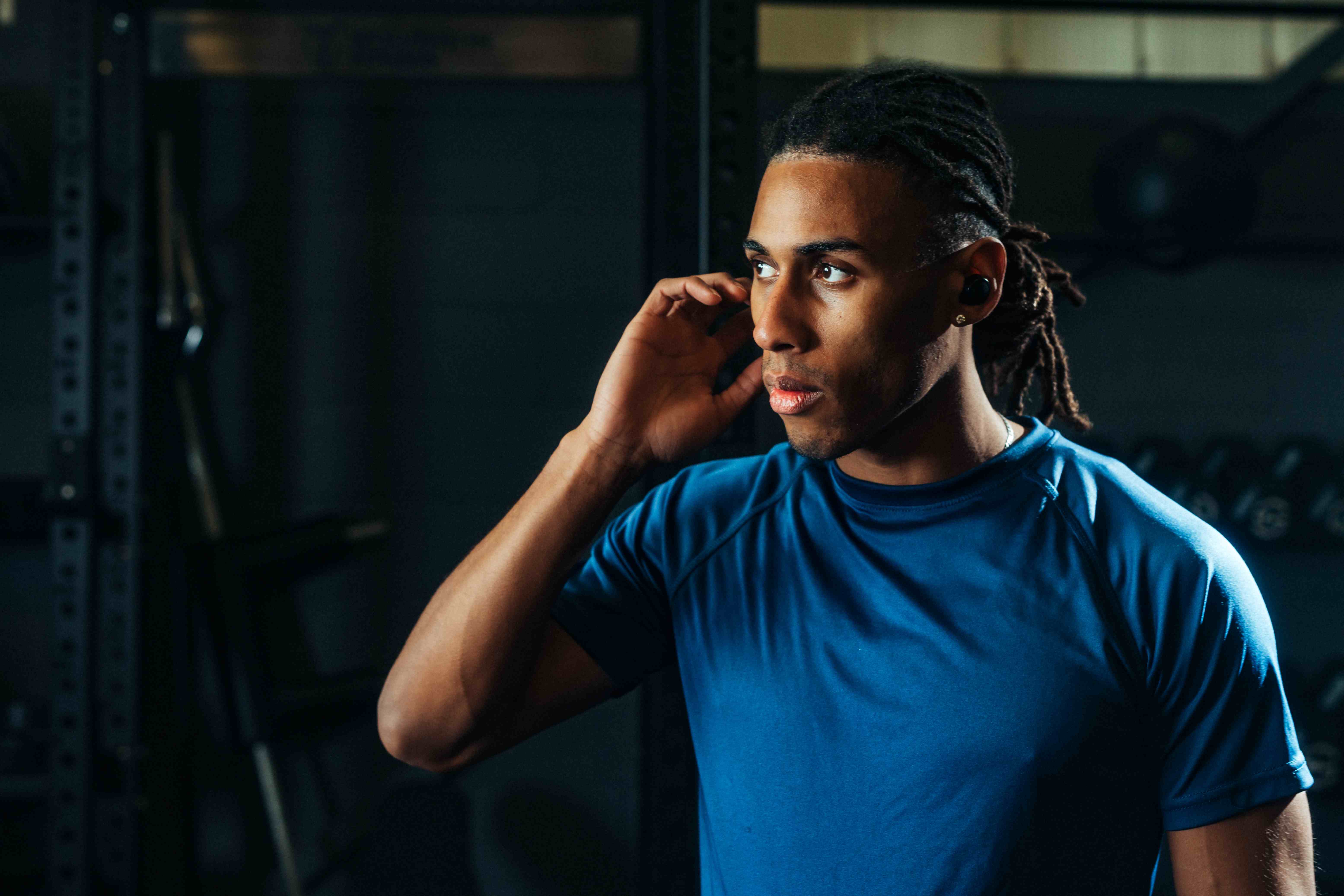
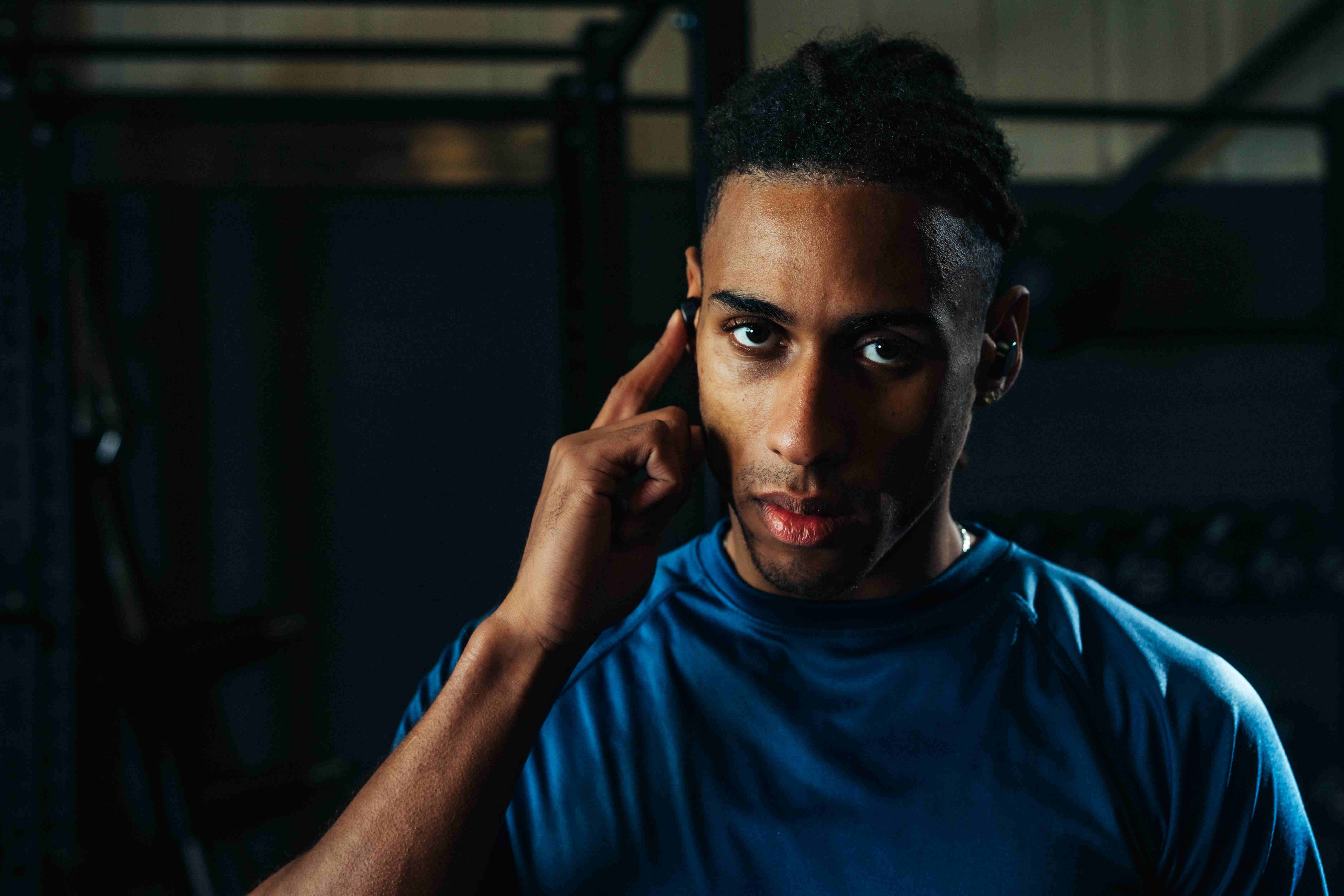
Train for the block that gets you to the start line. The TZ7 Ultra holds 1,000 songs on board, is IP68 rated and drop rated to two metres.
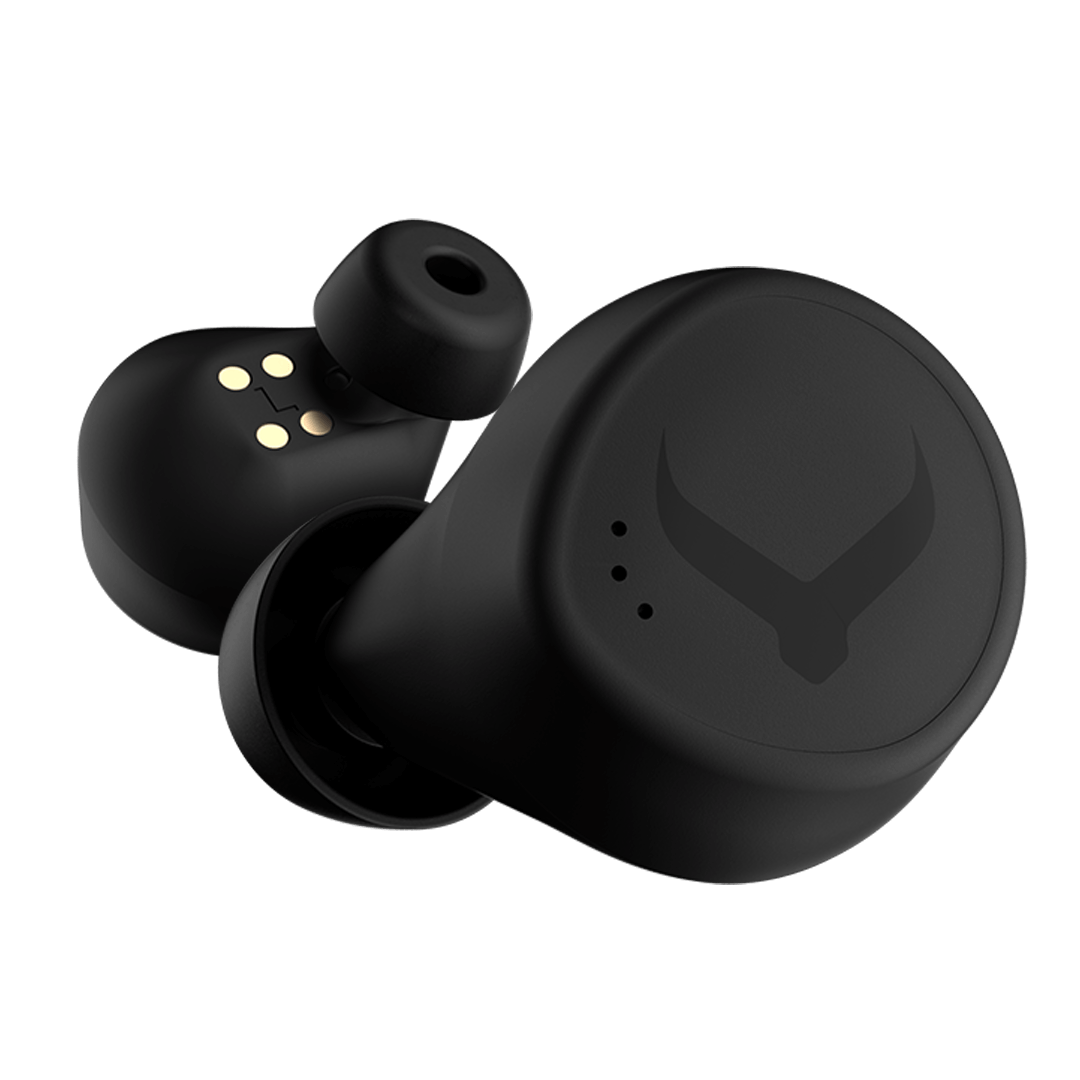
Introducing the ultimate workout earbuds.











.jpg)


.jpg)


.avif)
.avif)