Running Under Fatigue: Why Your HYROX Splits Collapse
Run one at 4:45. Run four at 5:20. Run eight at 6:30 or worse. That drift is where the HYROX race is lost, and it is a bigger number than anything happening on the stations. This guide covers the three mechanisms behind it, why the usual training response makes it worse, four sessions that fix it, roxzone quick wins and a pacing model you can actually execute.


Look at almost any mid-pack HYROX result and you will see the same shape. Run one at 4:45. Run four at 5:20. Run eight at 6:30 or worse. That drift is where the race is lost, and it is a bigger number than anything happening on the stations.
The good news is that it is a trainable problem rather than a fitness ceiling. The bad news is that the training most people do makes it worse.
What is actually happening
Three separate mechanisms compound.
1. Local muscular fatigue, not cardiovascular fatigue
You are not out of breath on run six. Your legs will not turn over. Sled pushes, lunges and wall balls load the quads and glutes eccentrically and heavily, and the residual fatigue is local. Your aerobic system is fine. The muscle recruiting that pace is not available.
This is why athletes with strong 5k times still bleed minutes in HYROX. A fresh 5k tests something the race does not ask for.
2. Cadence collapse
Under fatigue, stride length shortens first and cadence follows. Most athletes drop 5 to 10 steps per minute across a race. Because pace is cadence multiplied by stride length, and both are falling, the effect compounds. A drop from 172 to 162 steps per minute with a slightly shorter stride is easily 30 seconds a kilometre.
3. Pacing error banked early
Run one feels easy because you are fresh, so you run it 20 to 30 seconds faster than sustainable. That deficit is not repaid at a constant rate. It is repaid with interest, mostly in the second half.
The training almost everyone gets wrong
The standard response is to run more. More volume raises aerobic ceiling, which was not the limiter, and adds fatigue to legs that are already the problem.
The second standard response is to do more stations. This builds station capacity, which also was not the limiter.
What you need is specifically the transition between the two, repeated, at race intensity. The sport calls it compromised running. It is a distinct quality and it needs its own sessions.

Four sessions that fix it
Session 1: The station sandwich
The core session. Run 1km at race pace, complete one station at race weight, run 1km at race pace. Rest three minutes. Repeat three to five times, rotating stations.
The point is not the total volume. The point is teaching your legs to find pace within the first 200 metres after loading. Most athletes take 400 metres to settle, and there are eight of those in a race.
Session 2: Broken kilometres off the sled
Sled push at race weight, then 1km. Repeat four times. Brutal, and specific, because the sled is the single biggest degrader of the run that follows.
Do this once every two weeks, not weekly. The recovery cost is high.
Session 3: Cadence holds
Run 6 by 800m at race pace with a metronome or a playlist at your target cadence, and hold the cadence rather than the pace. As fatigue builds, stride length shortens and pace drops, and that is fine. What you are training is the ability to keep turnover when the legs want to slow down.
This is where a fixed tempo playlist earns its place. Set tracks at your target step rate and let entrainment carry the cadence. Our BPM playlist guide covers how to build one.
Session 4: Negative split practice
One full 8km continuous run, deliberately starting 20 seconds per kilometre slower than feels right, finishing faster than you started. Once a fortnight.
This trains the discipline, not the physiology. Almost every athlete who finally runs an even race describes the first two kilometres as feeling absurdly slow.
The roxzone
The roxzone is the transition area, and its time counts. Elite athletes lose under six minutes across the whole race. Mid-pack athletes routinely lose twelve.
Three quick wins:
- Know the route before you race. Walk it. Athletes lose ten to twenty seconds per transition simply looking for where to go.
- Do not stop. Jog the transition, however slowly. Stopping and restarting costs more than the recovery is worth.
- Fuel and drink on the move, at planned points, not when you feel like it.
Pacing the race properly
The target is an even or slightly negative split across the eight run legs. In practice, aim for run one to be your second slowest.
A workable model for a 90 minute athlete:
- Run leg 1: Average pace, no faster
- Run legs 2 to 3: Average
- Run legs 4 to 5: Average plus 5 to 10 seconds, this is the hard part
- Run legs 6 to 7: Average plus 10 to 15 seconds
- Run leg 8: Whatever is left
If run one is 30 seconds faster than average, you have already spent the race. If your late splits look like the list above rather than falling off a cliff, your pacing was correct even if the numbers feel slow at the time.
The strength work that supports it
Two things carry over most directly:
Single leg eccentric strength. Rear foot elevated split squats, step downs, Nordic curls. The quads' ability to absorb load repeatedly is what fails.
Posterior chain endurance. Not maximal deadlifts. Higher rep hinge work, hip thrusts, back extensions. The glutes fade late and the running form goes with them.
Two sessions a week, kept well short of failure so they do not eat into the running. Our aerobic base guide and the hybrid athlete training guide cover how to fit this alongside everything else.
Music, cadence and the phone problem
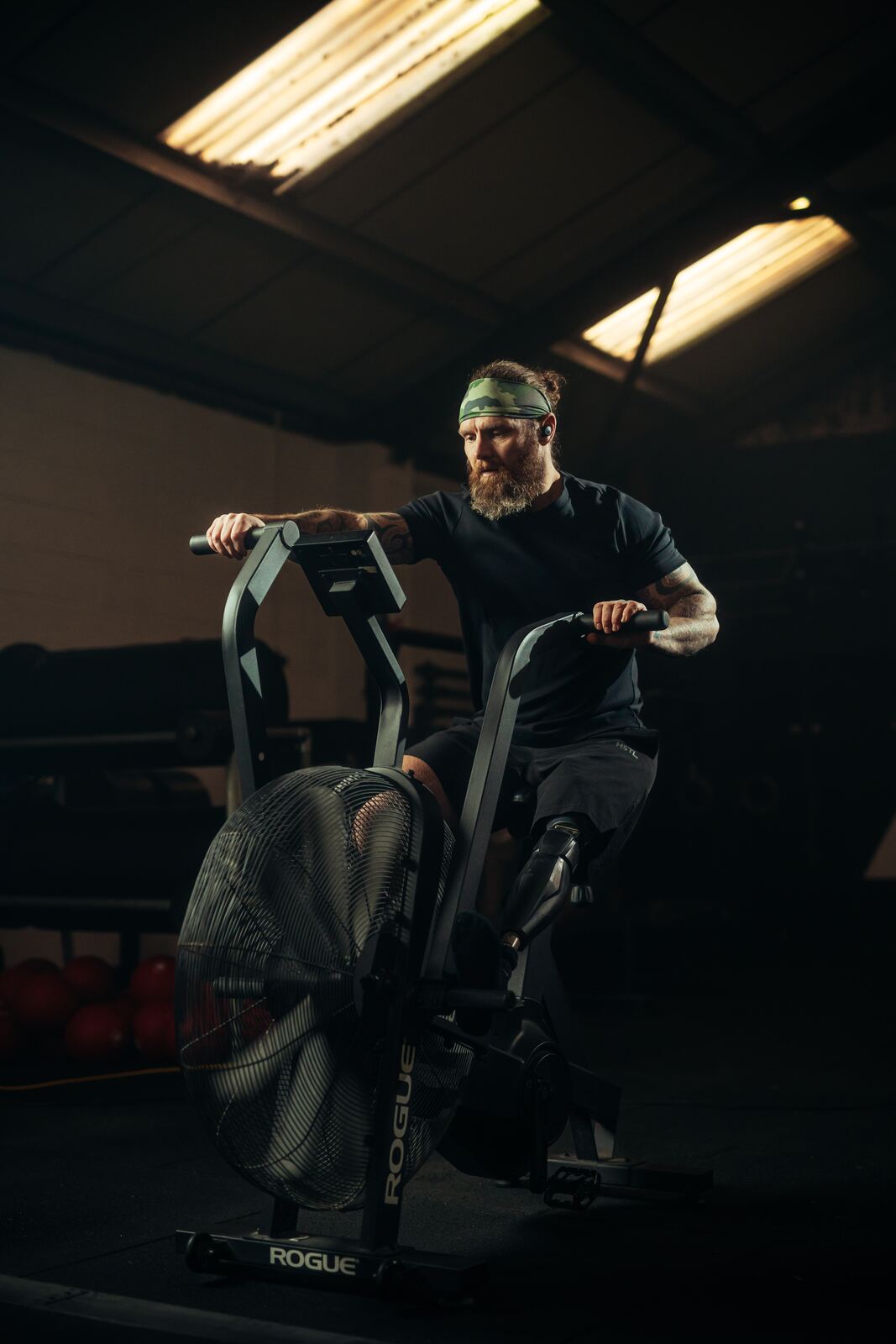
Cadence work needs a consistent external beat, which means the music has to be reliable for the full duration. A dropout at station six is not a minor annoyance when the playlist is doing your pacing.
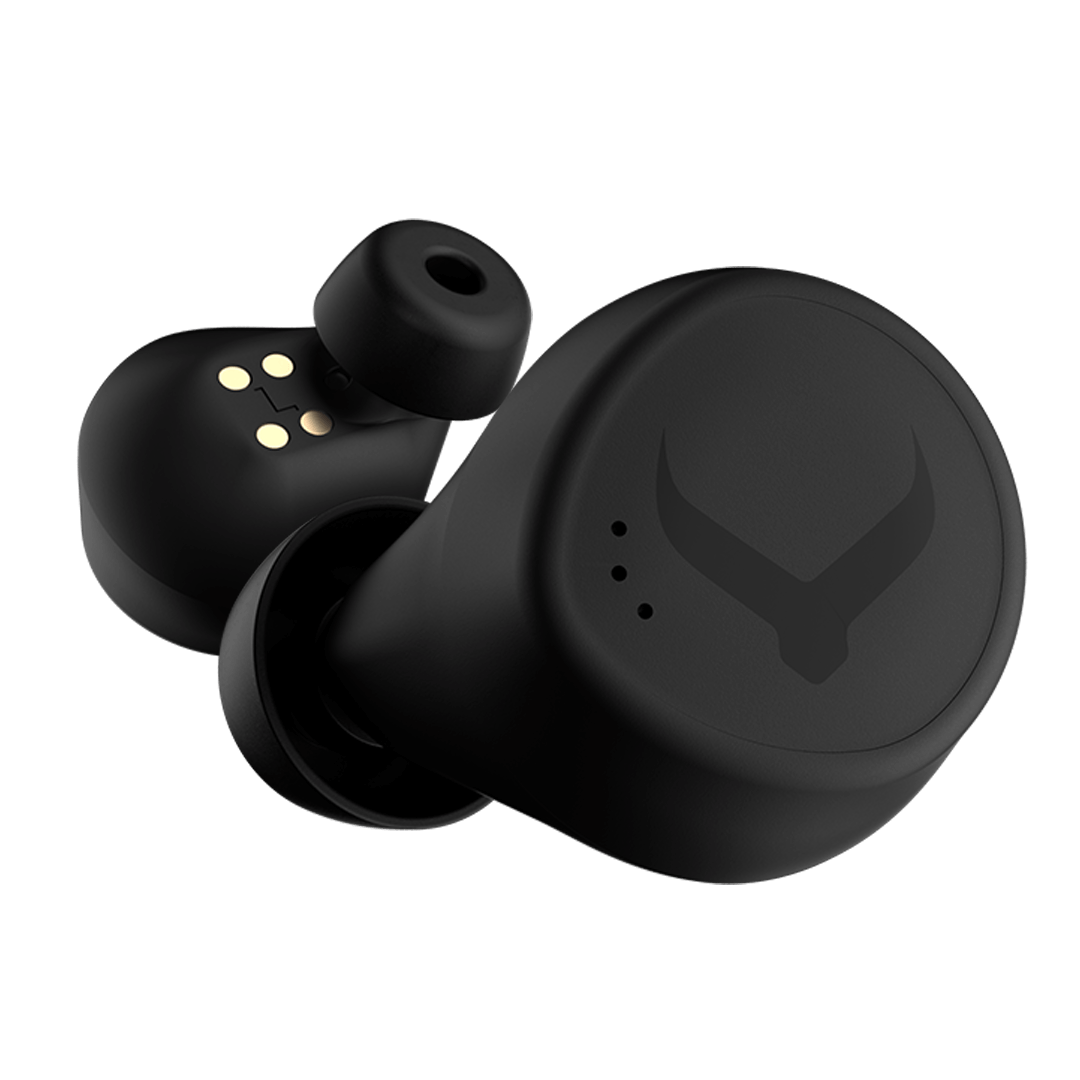
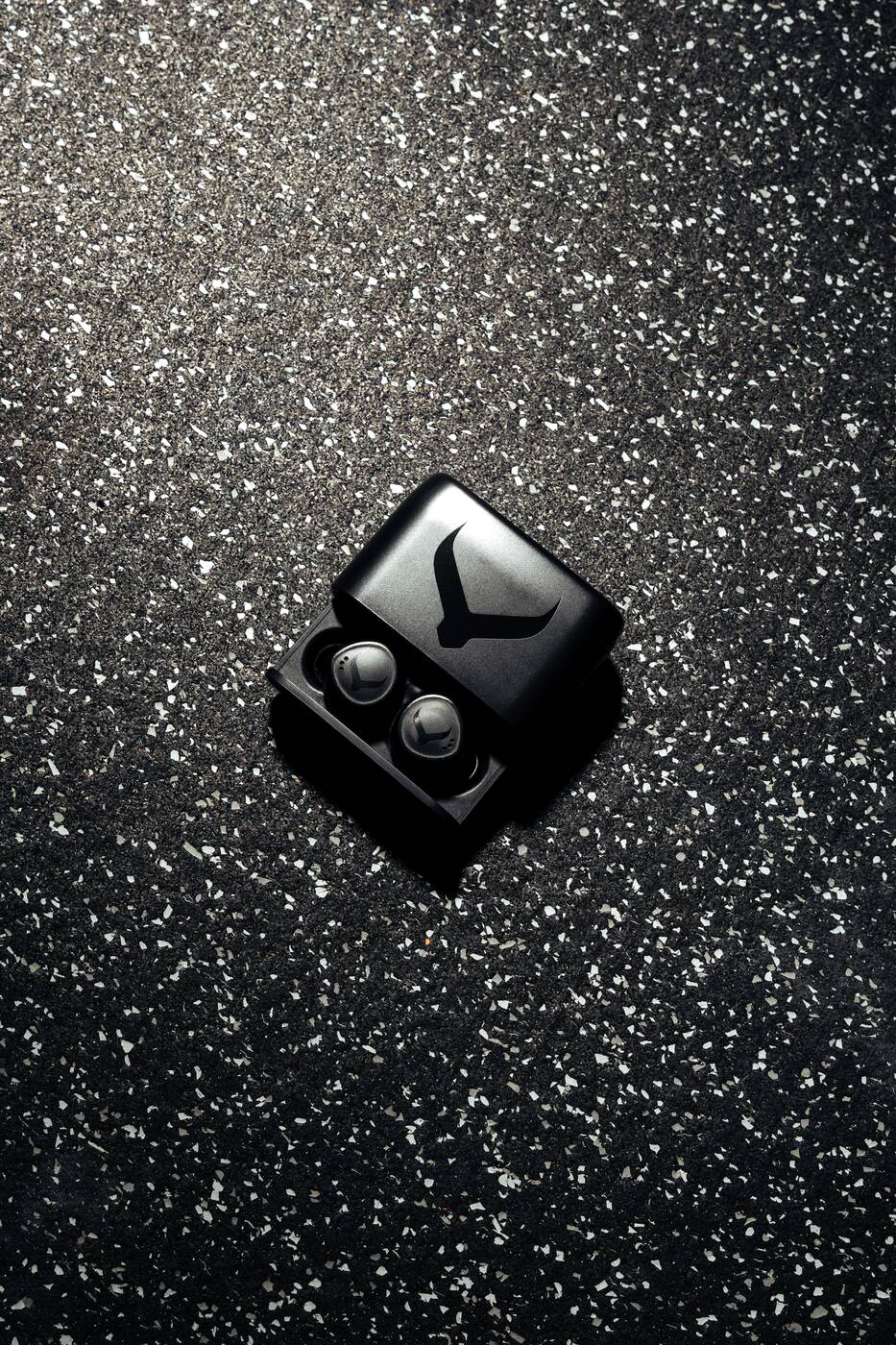
This is one of the clearest arguments for onboard storage, and the reason HYROX training earbuds are a different proposition from commuting earbuds. The TZ7 Ultra holds around 1,000 songs on 4GB, so there is no phone to carry, no signal to lose and nothing to fail in the roxzone. Our guide to the best earbuds for HYROX training covers the full specification, and if you want the wider case, see training without your phone.
FAQ
Why do I run slower in HYROX than in a standalone 5k?
Because the run legs are performed on legs pre-fatigued by heavy eccentric loading. Fresh 5k pace is not a useful predictor. Expect 45 to 90 seconds per kilometre slower than fresh pace.
How often should I do compromised running sessions?
Once or twice a week in a build phase. They are demanding, so replace an existing hard session rather than adding one.
Should I run more to fix my splits?
Only if your weekly volume is very low. Above roughly 25km a week, specificity beats volume for this particular problem.
What cadence should I aim for in HYROX?
Most athletes are best between 165 and 175 steps per minute. Measure your fresh cadence and try to hold it under fatigue rather than chasing a number.
What are the best earbuds for high intensity training like this?
For compromised running sessions specifically, you want onboard storage so the beat never drops, seven hours or more per earbud so a long session plus a race simulation is covered, and an IP68 rating because these are the sweatiest sessions you will do all week.
How much time can better pacing save?
For a typical mid-pack athlete, three to six minutes, without any change in fitness. It is the single cheapest improvement available.
Cadence work only works if the music does not drop out. The TZ7 Ultra holds 1,000 songs on board and is IP68 rated, built for the training block rather than the race itself, since HYROX forbids headphones in competition. Reserve yours.
Introducing the ultimate workout earbuds.
























.jpg)


.jpg)





.avif)
.avif)