Waterproof Earbuds for Training: IP68 vs IPX7 Explained
Almost every pair of waterproof earbuds for training carries a rating that looks reassuring, and very few buyers know what those ratings are tested for. The gap between IPX4 and IP68 is far larger than one digit suggests. This guide decodes the IP system in plain English, and covers the three things it does not tell you at all: sweat chemistry, impact resistance, and what happens to a seal after two years.


Almost every pair of waterproof earbuds for training carries a rating that looks reassuring. Very few buyers know what those ratings are tested for, and the gap between IPX4 and IP68 is far larger than one digit suggests.
Here is the whole system in plain English, and the two things it does not cover at all.
The IP code, decoded
IP stands for Ingress Protection. It is an international standard, IEC 60529, and it takes two digits.
First digit: solids. Scale of 0 to 6.
- 4: Objects over 1mm
- 5: Dust, limited ingress permitted, no harmful effect
- 6: Dust tight, no ingress at all
Second digit: liquids. Scale of 0 to 9.
- 4: Splashing water from any direction
- 5: Low pressure water jets
- 6: Powerful water jets
- 7: Immersion to 1 metre for 30 minutes
- 8: Continued immersion, conditions specified by the manufacturer
An X in either position means not tested, not immune. IPX7 means the product was tested for immersion but was never tested for dust at all.
So what is the real difference?
IPX4 is the most common "sports" rating. Splash resistant. Not dust tested. Survives rain and light sweat.
IPX7 survives a drop in a puddle for half an hour. Says nothing about dust, which matters enormously in a chalk-heavy gym.
IP68 is dust tight and rated for continued immersion. It is the only rating in common use that covers both problems.
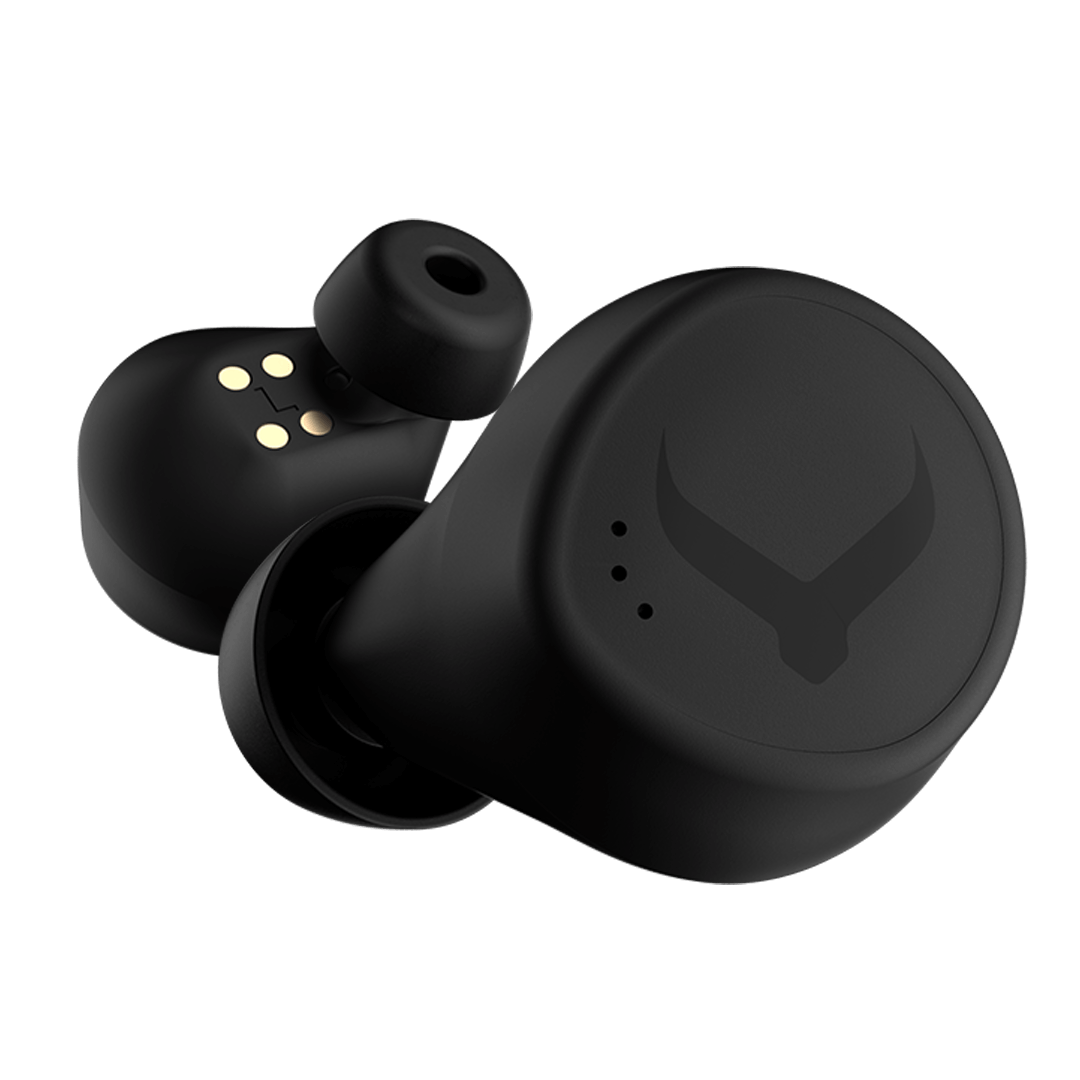
The TZ7 Ultra is IP68 rated, and we have taken it well past what the certificate asks for. It has survived seven days fully submerged: in fresh water, in salt water, and in chlorinated water. That is a durability test rather than an invitation to swim in them. What it tells you is that a two hour session in a hot gym, a run in heavy rain, or a case left in a damp kit bag are nowhere near the limit of the product.
If you are searching for IP68 waterproof earbuds for gym use specifically, that second digit is the one to check. And if you want waterproof mp3 earbuds, meaning a sealed product that also stores its own music rather than receiving it over Bluetooth, the field narrows to almost nothing, because very few sealed earbuds carry onboard storage at all.
The two things IP ratings do not cover
This is the part the industry does not advertise.
1. IP testing uses fresh water, not sweat
The standard specifies clean water. Human sweat is a saline solution, mildly acidic, containing sodium chloride, lactate, urea, ammonia and trace metals. It is electrically conductive and mildly corrosive.
The practical consequence is that a product can pass IPX7 in a lab and still fail after six months of heavy training, because chloride ions have crept along a seam and started corroding a contact. This is exactly why we ran our own immersion testing in salt water and chlorinated water as well as fresh: the standard only proves the easy case.
2. IP ratings say nothing about impact
There is no digit for "dropped on rubber flooring". A product can be IP68 and shatter the first time it falls out during a burpee. This is why the words indestructible and rugged, which brands use freely, are not covered by any part of the IP standard.
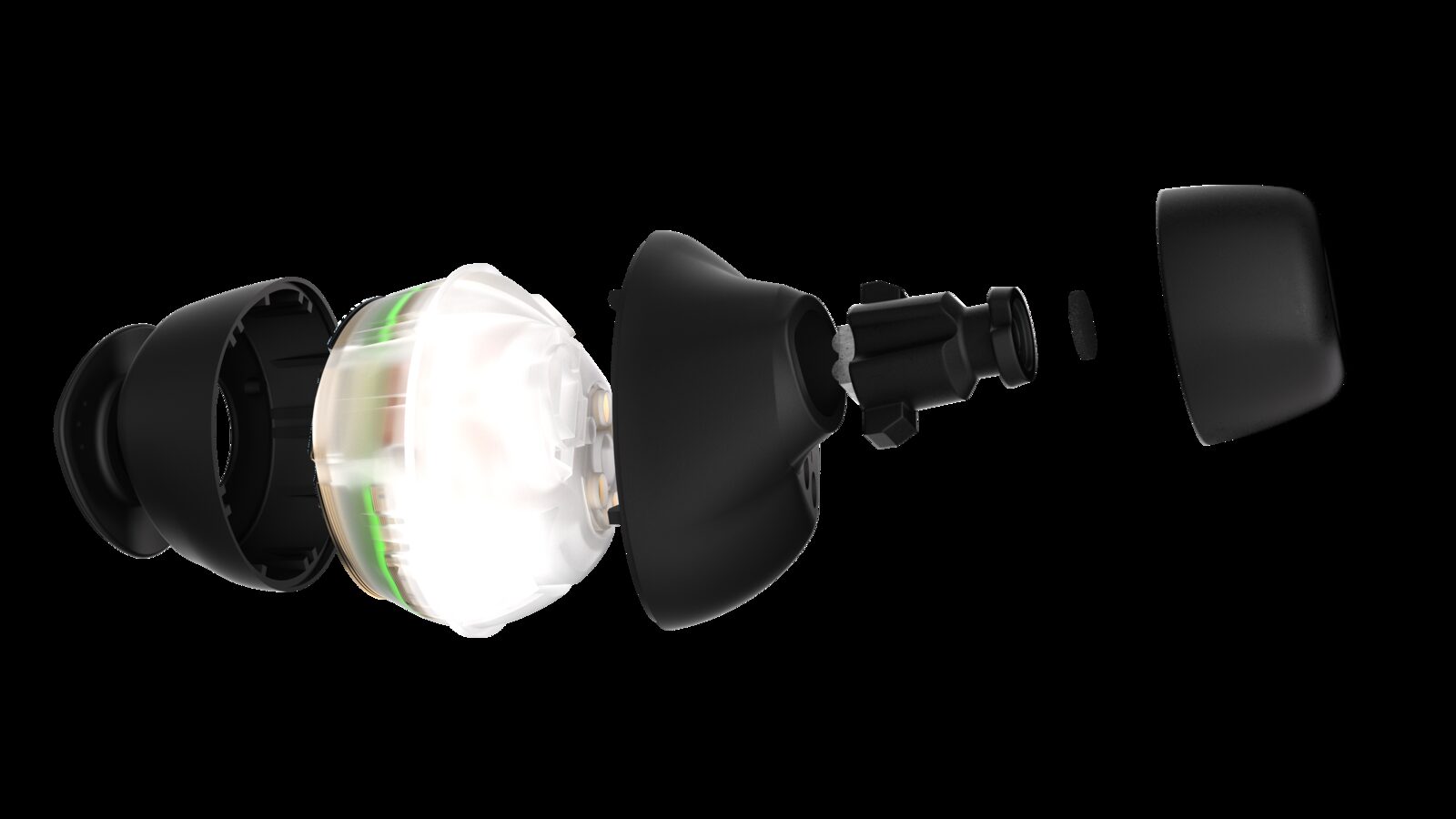
We treat impact as a separate engineering problem with its own solution. The TZ7 Ultra uses a patented encapsulation process that fills the voids around internal components, so shock energy spreads through the body rather than concentrating on solder joints and PCB edges. Three patents cover that durability work. Most earbuds have no equivalent, which is why our guide to why your earbuds keep breaking opens with drops rather than water.
And a third: ratings are tested when new
IP certification is performed on a new unit. Seals age. Adhesives creep under thermal cycling. Pressure vents clog with chalk dust and skin cells. A two-year-old IPX7 product is not an IPX7 product any more, and no manufacturer will tell you what it is instead.
What this means for your buying decision
Match the rating to the actual environment, not the marketing category.
- Gym, air conditioned, moderate sweat: IPX5
- Outdoor running, all weather: IPX6 or IP66
- Waterproof earbuds for CrossFit, with chalk and heavy sweat: IP67 minimum, IP68 preferred
- HYROX and long high-sweat sessions: IP68
- Obstacle racing, mud, river crossings: IP68, and ask what the manufacturer actually tested
- Sauna or steam room: None of them. Heat destroys seals and no IP digit covers it
Two practical notes. First, a bare IP68 badge tells you less than it looks. Ask the manufacturer what they actually tested, in what, and for how long, because the standard leaves those conditions to them. Second, check whether the rating applies to the buds only or to the charging case as well. Very often the case is rated lower or not at all, and the case is where the charging pins live.
If CrossFit is your main modality, our guide to CrossFit earbuds covers fit and impact alongside the water rating.
How to make any rating last longer
- Rinse the buds under a slow tap after heavy sweat sessions, then dry thoroughly before charging
- Never charge a wet bud. Water plus current across contacts is how corrosion accelerates
- Wipe the case lip and charging pins weekly, especially if you train around chalk
- Dry the case interior. Most people clean the buds and put them back into a damp case
- Do not use alcohol wipes on the mesh or vents. They degrade the acoustic membranes
- Store somewhere temperature stable. A car in summer cooks both the battery and the seals
Ten seconds after each session extends a product's life more than any specification on the box.
The honest summary
IP68 is meaningfully better than IPX7, which is meaningfully better than IPX4. But no IP rating tells you whether a product survives sweat over years or a drop onto a gym floor, and those are the two things that actually kill earbuds in functional fitness.
When you compare products, ask three questions: what is the IP rating including both digits, what did the manufacturer actually test beyond the certificate, and what have they done about impact. A brand that can answer all three has engineered the product. A brand that only quotes the first has bought a certificate.
FAQ
Is IP68 fully waterproof?
It is dust tight and rated for continued immersion under conditions the manufacturer specifies. That is as close to waterproof as consumer electronics gets. It is a measure of how much abuse the seal tolerates, not a licence to use the product in water.
Are Tzuka earbuds swimming earbuds?
No. We do not design, test or sell the TZ7 Ultra for swimming. They have survived seven days fully submerged in fresh, salt and chlorinated water, but that is a durability benchmark for sweat and weather, not a swim feature. Bluetooth also does not travel through water, so in-ear buds are the wrong tool for the pool. If swimming is your sport, look at a purpose-built bone conduction unit; we cover the trade-offs in bone conduction vs in-ear.
Are waterproof mp3 earbuds a real category?
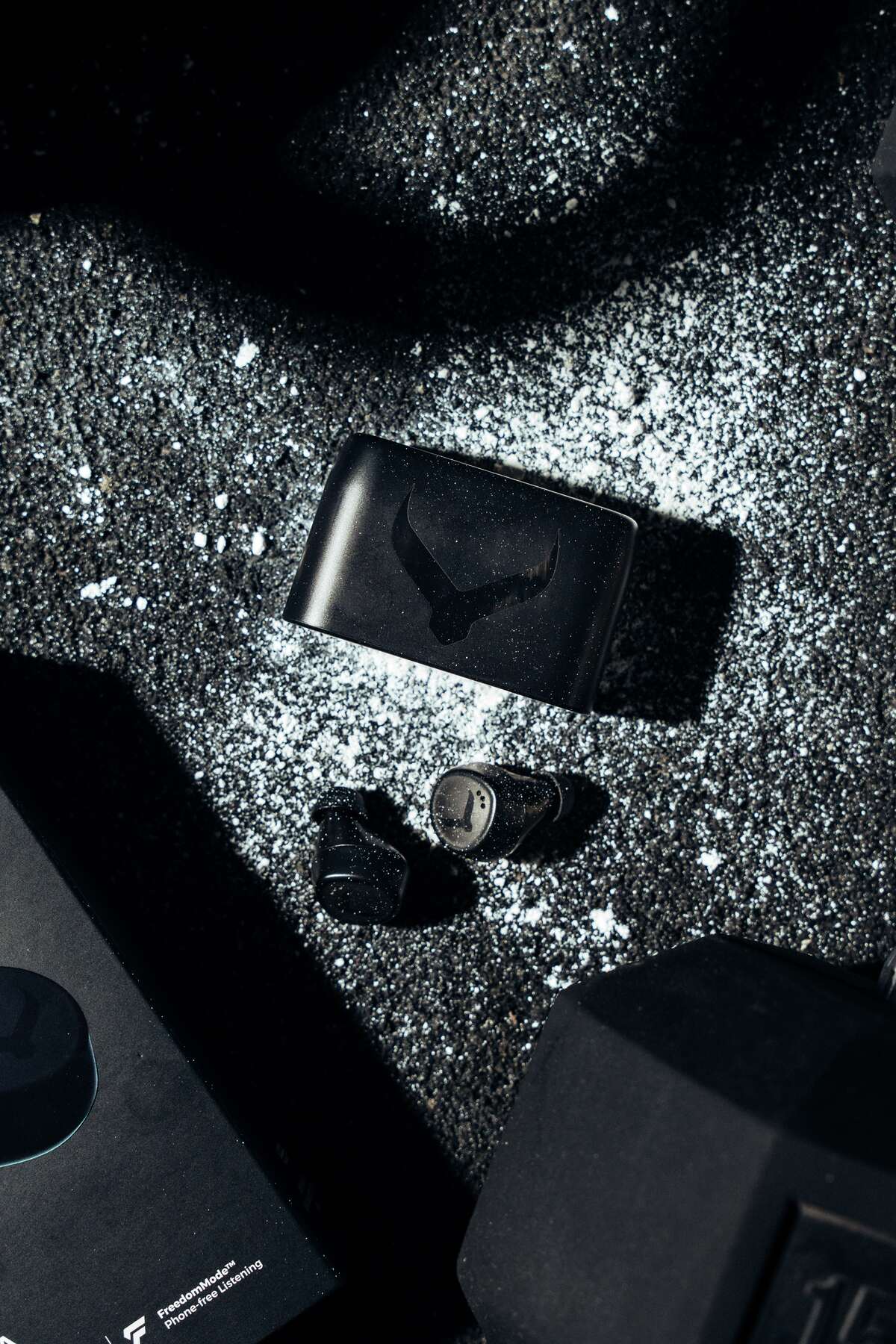
Yes, but a small one. It means a sealed earbud that stores its own music rather than receiving it. Very few products combine both. The TZ7 Ultra is IP68 rated and holds around 1,000 songs on 4GB of onboard storage, which is what FreedomMode means.
Does IPX7 mean dustproof?
No. The X means dust was never tested. In a chalk-heavy environment that is a real gap.
Will sweat void my warranty?
Read the terms carefully. Several major brands explicitly exclude sweat damage from warranty cover while advertising the product for sports use.
Is IP68 worth paying more for?
If you sweat heavily, train outdoors in all weather, or train in a chalk-heavy gym, yes. If you use earbuds for commuting, IPX4 is genuinely enough and paying for more is not a good use of money.
IP68, seven days submerged in fresh, salt and chlorinated water, and impact resistance protected by three patents. The TZ7 Ultra was built to still be working in year three. Reserve yours.
Introducing the ultimate workout earbuds.

















.jpg)


.jpg)



.avif)
.avif)