CrossFit Earbuds: What Actually Survives a Box
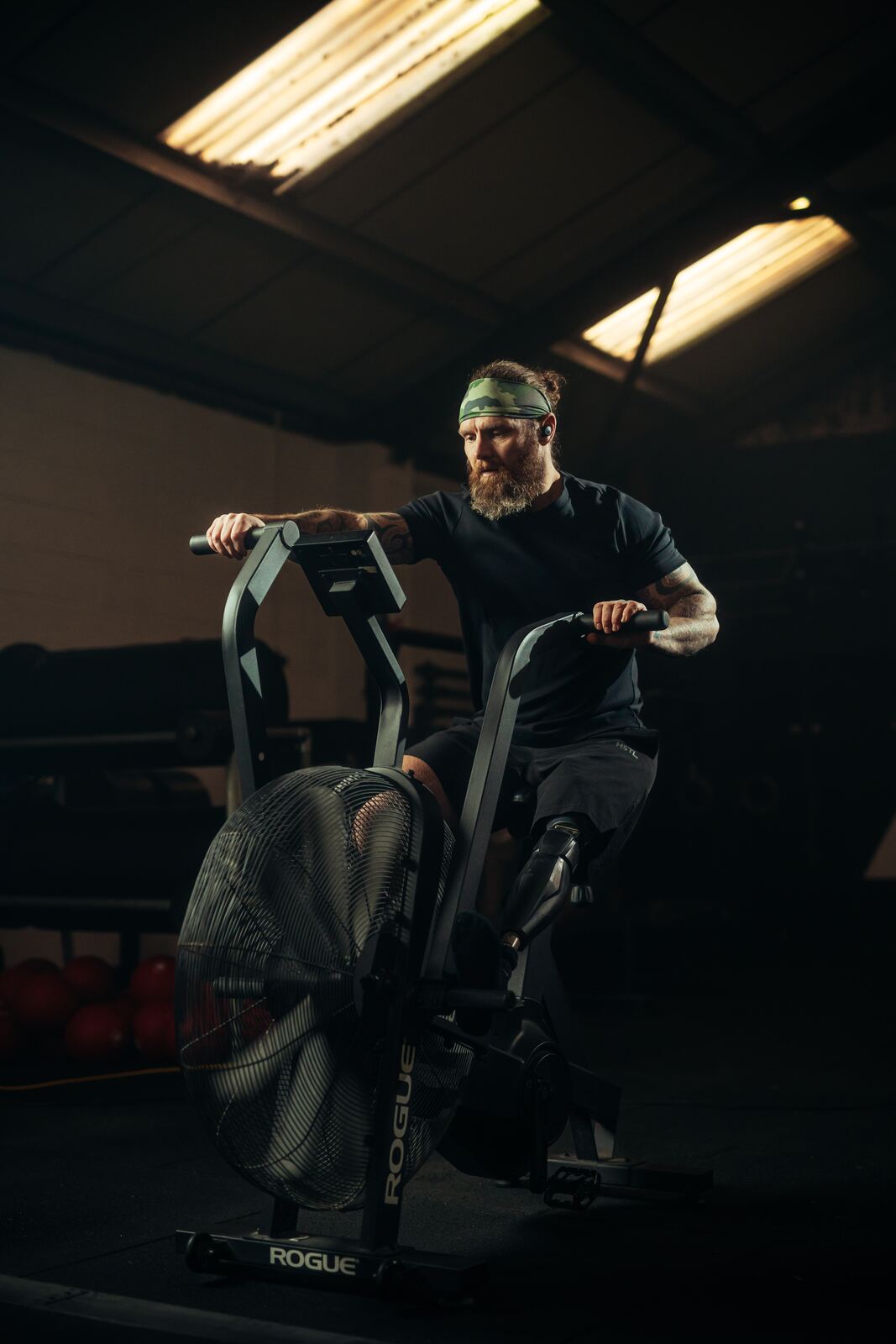
Ask any CrossFitter how many pairs of earbuds they have been through and watch them do the maths. Three. Five. One coach we spoke to had lost count somewhere past eight. CrossFit is a uniquely hostile environment for consumer audio hardware, and almost every pair on the market was designed for a commute. This guide covers the four failure modes that kill earbuds in a box, and the five specifications that decide whether a pair survives a year.


Ask any CrossFitter how many pairs of earbuds they have been through and watch them do the maths. Three. Five. One coach we spoke to had lost count somewhere past eight.
This is not a coincidence, and it is not carelessness. CrossFit is a uniquely hostile environment for consumer audio hardware, and almost every pair of earbuds on the market was designed for a commute. A functional fitness workout does things to a small sealed electronic device that a bus journey does not.
Why the box kills earbuds
Four distinct failure modes account for nearly every dead pair.
1. Impact, not water
Most people assume sweat is the killer. It is a factor, but the more common cause of death in a box is blunt trauma. Earbuds fall out during a burpee and land on rubber flooring from head height. They get knocked off during a rope climb. They sit in a gym bag that gets dropped, kicked and sat on. They fall out of a case that has been thrown into a locker.
Consumer earbuds are dense with fragile components, mounted on thin PCBs, in a plastic shell held together with adhesive. They are not designed to absorb repeated shock loads.
2. Sweat is chemically nasty
Sweat is not water. It is a mildly acidic saline solution containing lactate, urea and trace metals. Over months it corrodes contacts, degrades adhesives and creeps into the seams around microphones and pressure vents. An earbud that survives a rain shower may still fail after ninety days of two-hour sessions.
3. The charging case is the weak link
Manufacturers protect the buds and forget the case. Hinges wear, magnets weaken, the lid stops closing flush, chalk gets into the charging pins. The buds are fine and the product is dead.
4. Bluetooth in a room full of Bluetooth
A busy box has thirty phones, a gym sound system, wireless mics, heart rate straps and smartwatches competing for the same 2.4GHz band. Add a phone left on a bench forty feet away and a human body full of water standing between it and your ear, and dropouts are physics rather than bad luck.
What to actually look for
Ignore the marketing adjectives. There are five specifications that decide whether a pair survives a year in a box.
Impact resistance, stated explicitly
This is the specification almost nobody publishes, because almost nobody engineers for it. Look for a manufacturer that talks about how the internals are mounted, potted or encapsulated rather than one that only quotes a water rating. If the brand cannot tell you what happens when the bud hits the floor, assume the answer is nothing good.
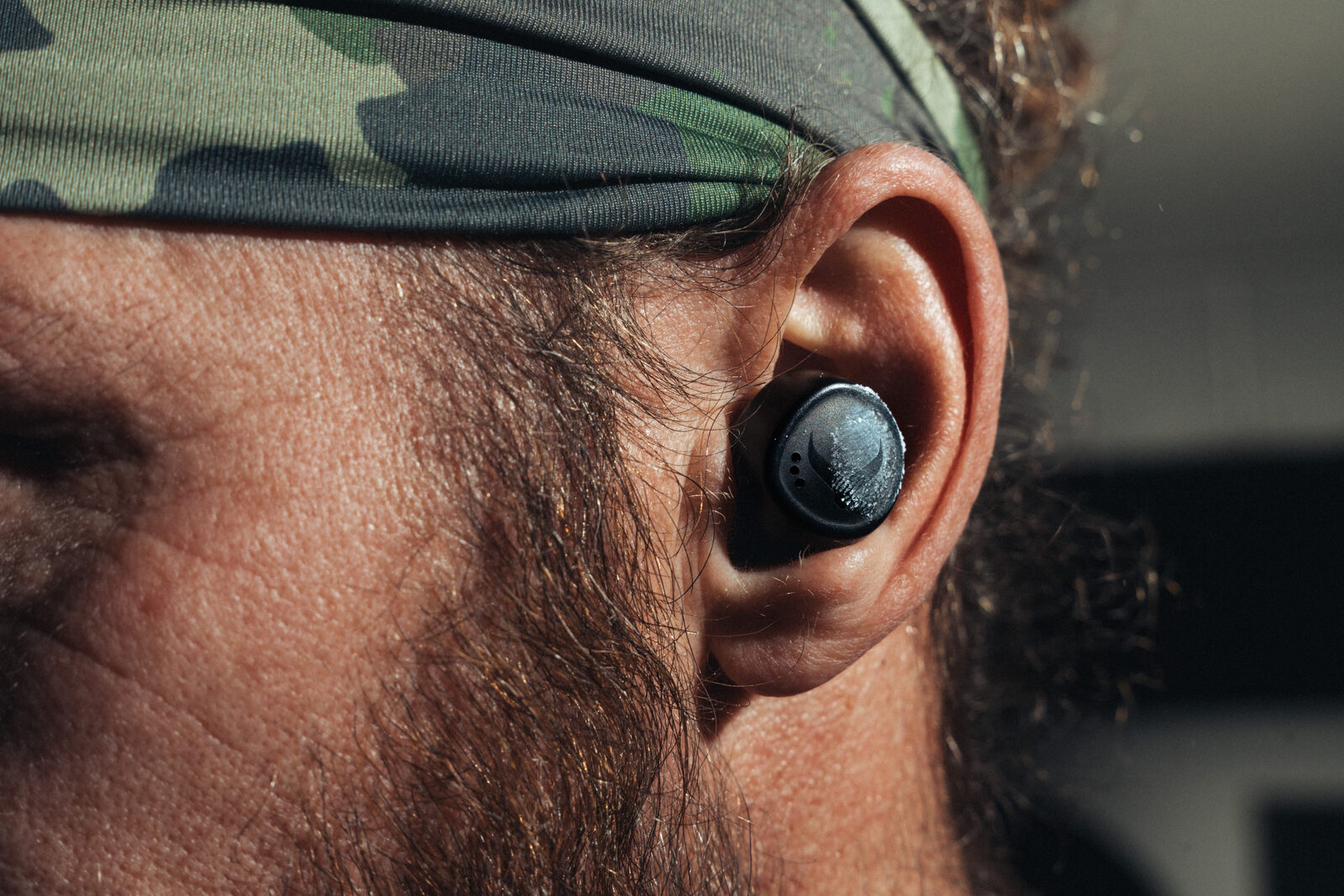
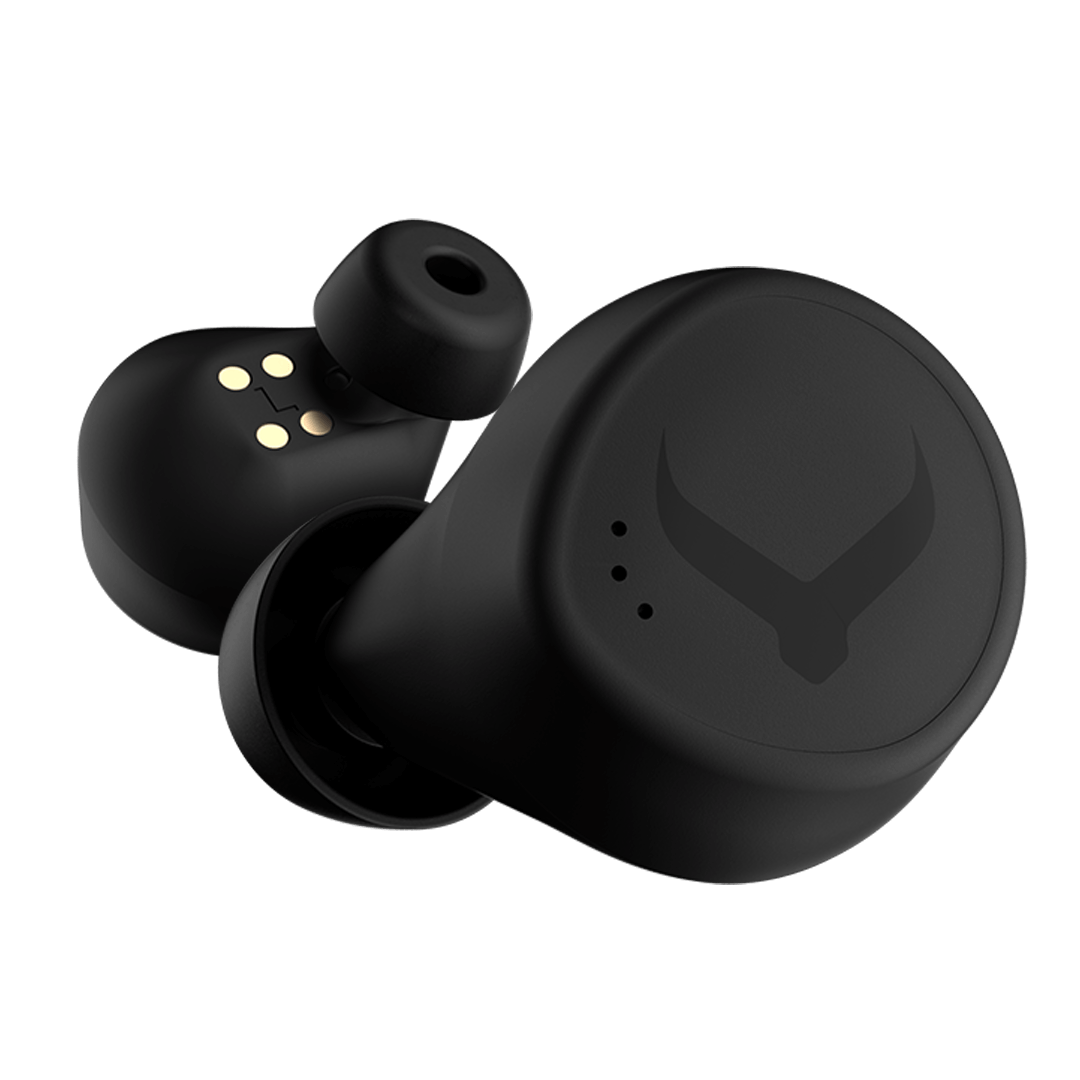
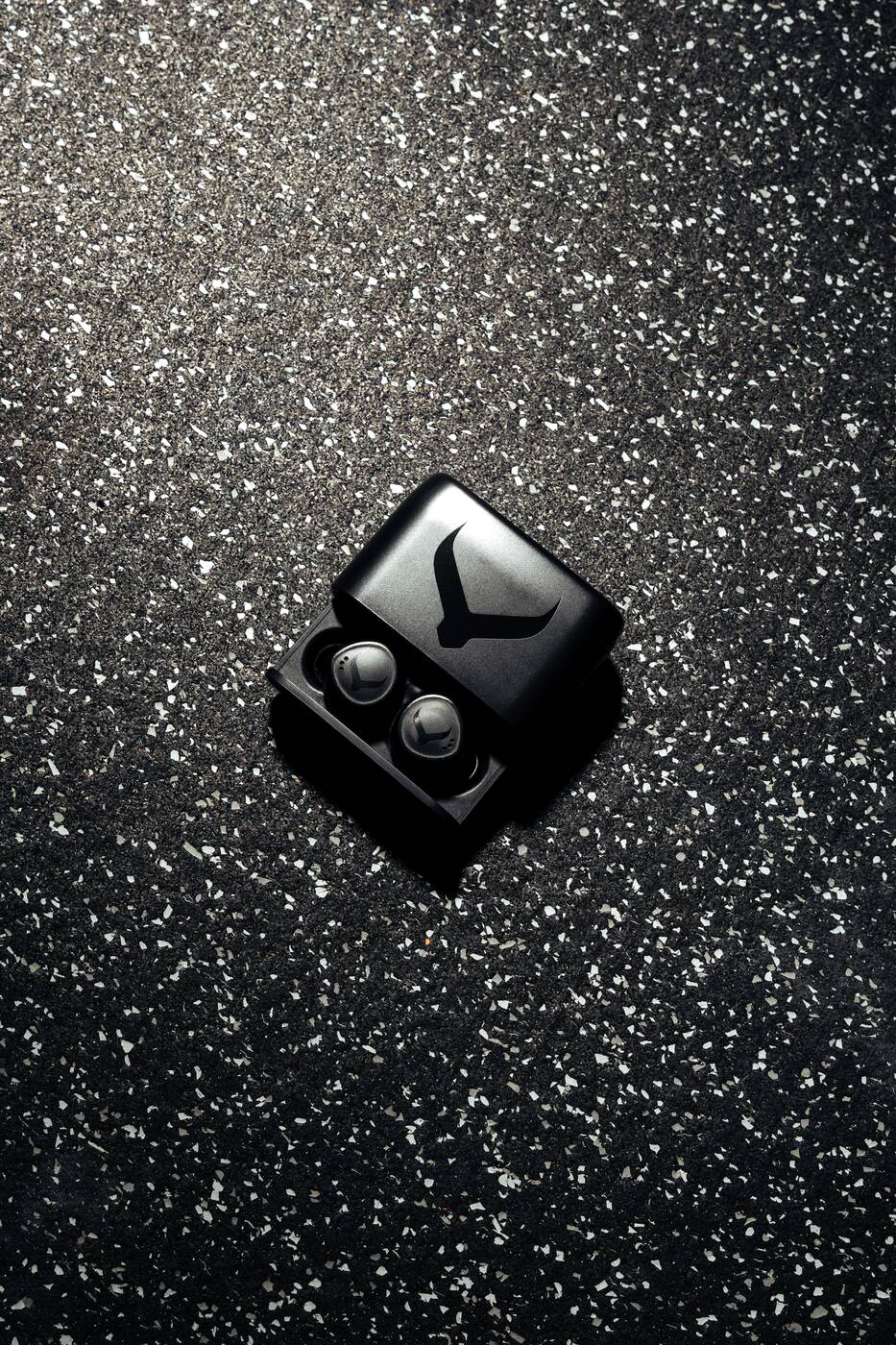
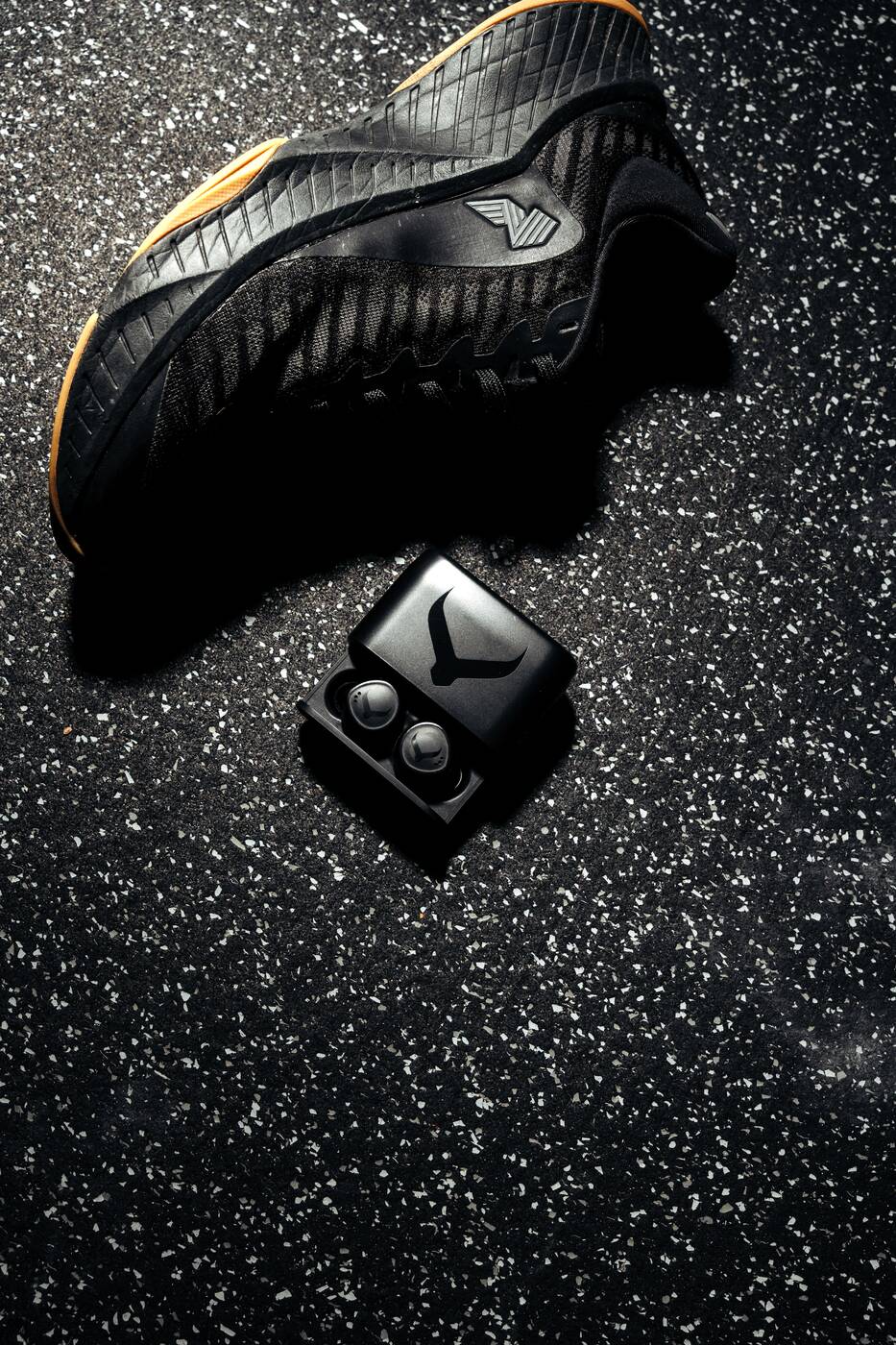
Tzuka's TZ7 Ultra uses a patented encapsulation and assembly process that fills voids around the internal components, so shock energy is distributed rather than concentrated on solder joints and PCB edges. That approach is the reason our durability is protected by three patents rather than a claim in a product listing.
IP68, and understand what it means
IP68 is dust-tight and rated for continued immersion. IPX4, which most "sports" earbuds carry, means splash resistant from any direction and nothing more. The gap between those two ratings is the gap between surviving your sessions and surviving one of them. If you are shopping for waterproof earbuds for CrossFit specifically, treat IP67 as the floor and IP68 as the target. We break the ratings down properly in our guide to waterproof earbuds for training.
Mechanical fit, not just tip size
A silicone tip creates a seal. It does not create retention. For high-impact work you want a shape that locates against the concha, or a wing or fin, so that the bud is held by geometry rather than friction. Three tip sizes in the box is a minimum, not a feature.
Battery per bud, not "total with case"
Brands quote 30 or 60 hours because it includes case recharges. What matters to you is time in the ear before the bud dies. Anything under five hours means a long session plus a class plus a run home is a gamble. The TZ7 Ultra runs seven hours per earbud.
A path that does not need your phone
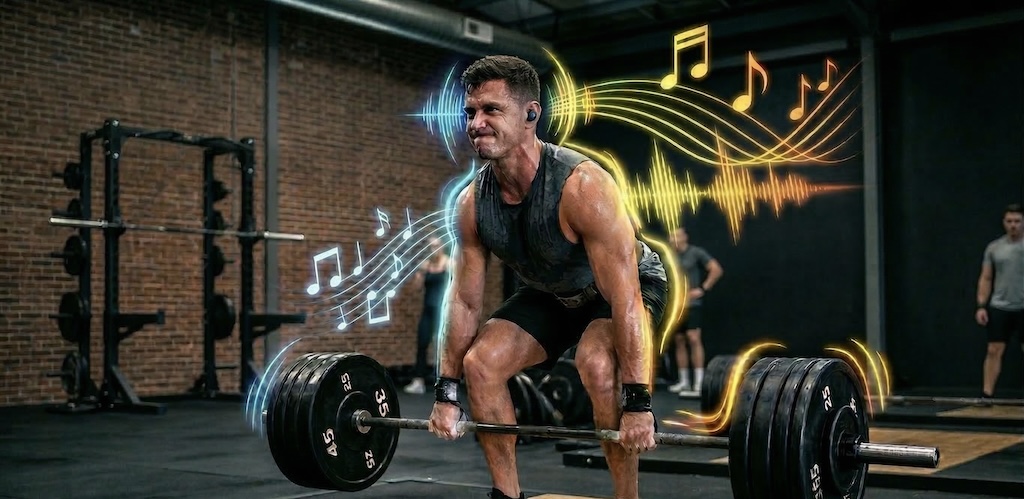
This is the specification that changes how the session feels rather than how long the product lasts. Onboard storage removes the phone from the equation entirely: no pairing, no dropouts across the floor, no device to protect.
The phone problem in CrossFit specifically
CrossFit is worse than most sports for phones. You are moving between rig, floor, rower and platform. There is nowhere safe to put a phone that is also within Bluetooth range. Most people end up either wearing it in a pocket, where it gets crushed during floor work, or leaving it on a bench and accepting the dropouts.
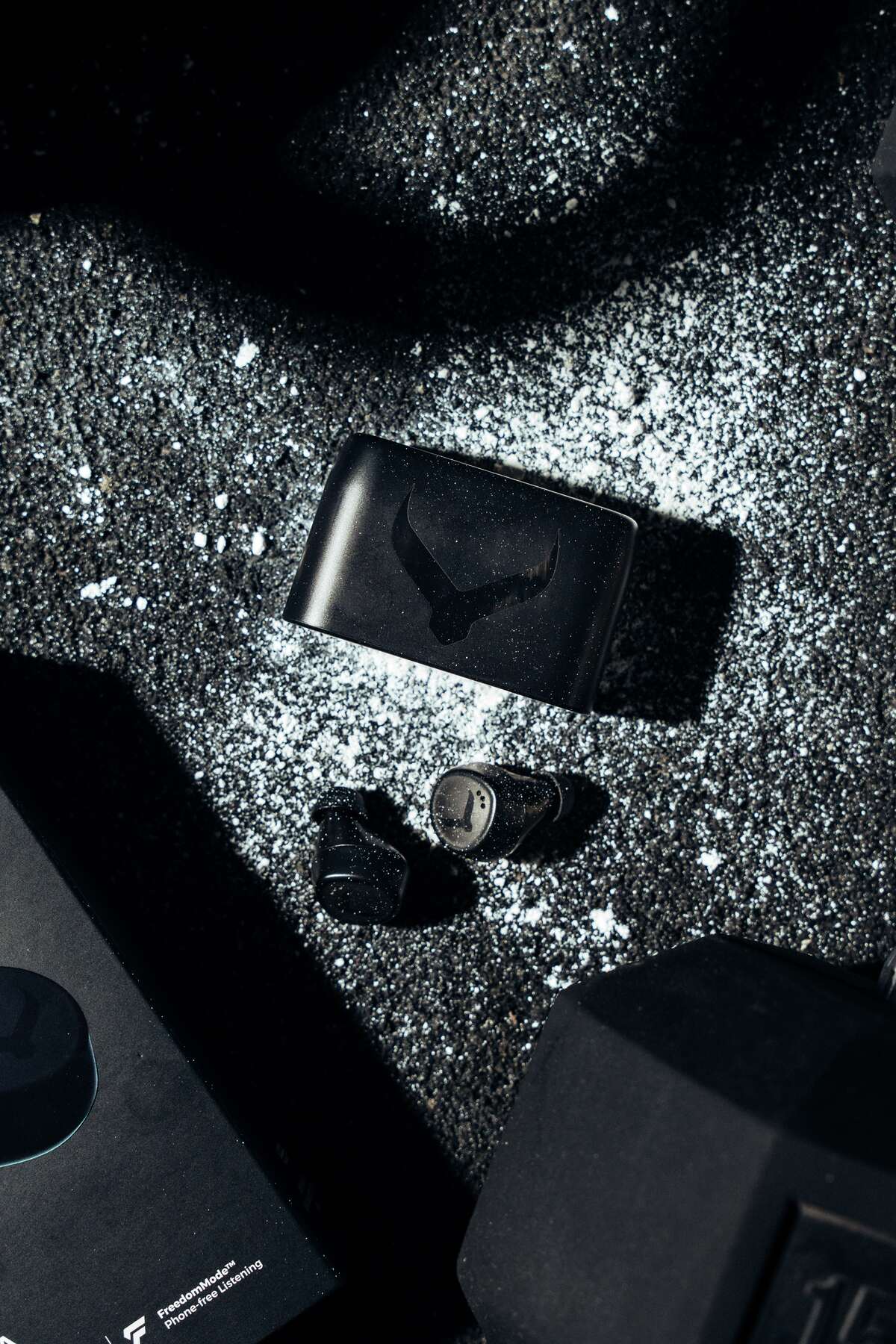
The TZ7 Ultra stores around 1,000 songs on 4GB of onboard memory. We call it FreedomMode. You load your music once, leave the phone in the locker and train. Bluetooth is still there when you want it, which makes it the only true wireless earbud with both. If you want the full argument for training without a phone, we have written it up in the case for distraction-free training.
What good looks like in practice
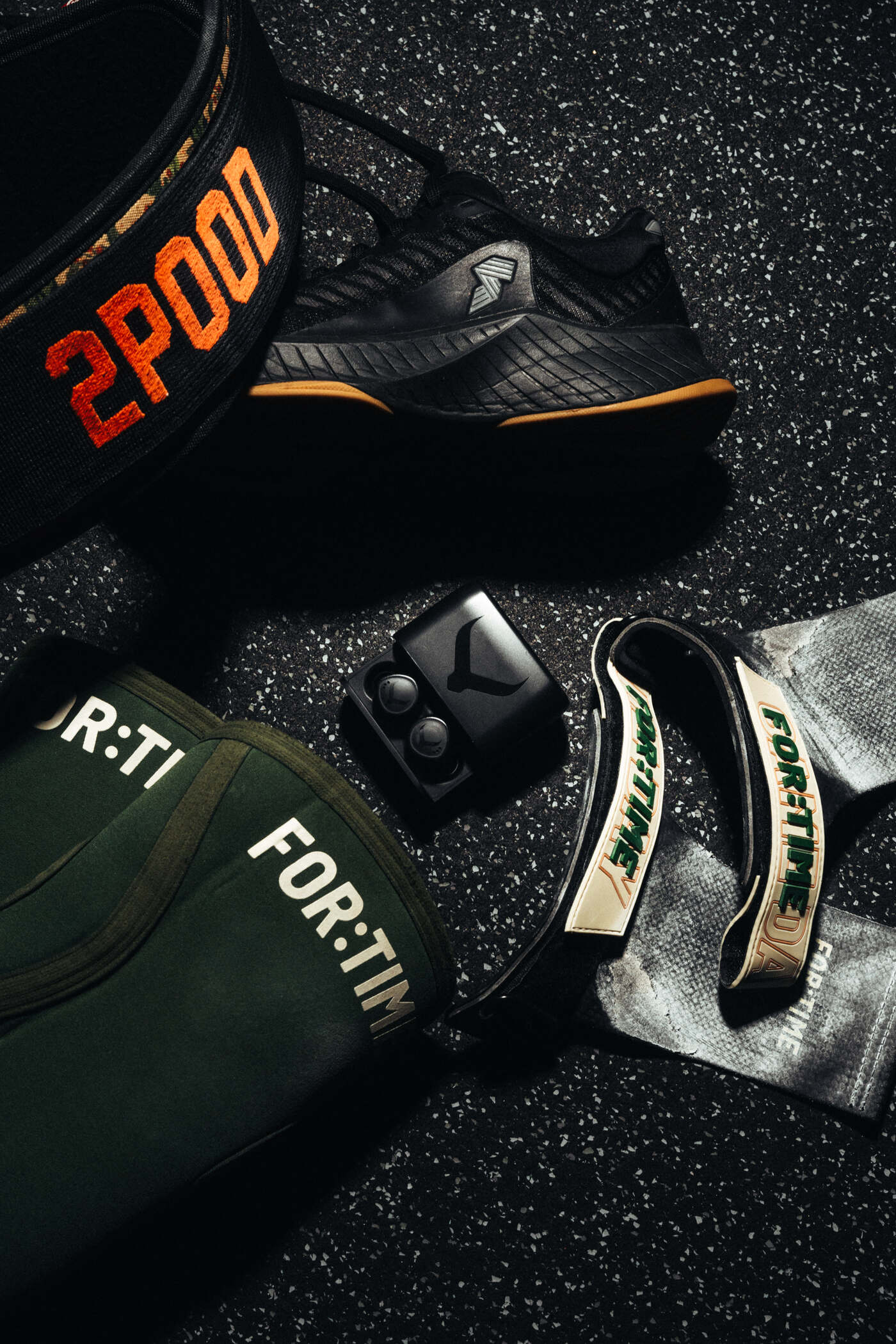
A pair of earbuds that works for CrossFit should pass this test:
- Survives being dropped onto rubber flooring from standing height, repeatedly
- Stays in the ear through burpees, double-unders and a rope climb
- Handles two hours of heavy sweating without sound degradation
- Charges reliably after chalk exposure
- Plays music with the phone in a locker on the other side of the building
- Costs less over three years than the four pairs it replaces
Very few products on the market clear all six. Most clear two.
The economics nobody mentions
A £180 pair that lasts three years costs £60 a year. A £120 pair that lasts nine months costs £160 a year. The cheap option is the expensive one, and it also means three separate occasions where your music died mid-session.
This is the whole reason Tzuka exists. We were not trying to build a better-sounding earbud. We were trying to build one that was still working in year three.
FAQ
Are AirPods Pro good for CrossFit?
They sound excellent and they are not built for it. The fit relies on seal rather than mechanical retention, the case hinge is a known wear point, and the water rating covers sweat but not immersion. They will work. They will not last.
Do earbuds fall out during burpees?
Standard round-body earbuds frequently do. Look for a shape that locates in the concha, or a fin, and make sure you have tested all three tip sizes rather than assuming the fitted default is right.
What are the best earbuds for functional fitness rather than CrossFit specifically?
The requirements are the same. Any functional fitness workout mixes barbell work, gymnastics and conditioning, so you need impact resistance, mechanical retention and an IP68 rating. Sport-specific branding matters far less than those three specifications.
Is bone conduction better for CrossFit?
It solves fit and situational awareness, and it costs you bass and isolation. We compare the two properly in bone conduction vs in-ear for functional fitness.
Can I use earbuds without my phone in a class?
Only if they have onboard storage. Standard true wireless earbuds are a receiver and nothing else, so no phone means no audio.
Does chalk damage earbuds?
Chalk dust is abrasive and hygroscopic. It works into charging contacts and case hinges and holds moisture against them. Wipe the pins and the case lip weekly.
Stop replacing earbuds every nine months. The TZ7 Ultra is engineered for the training that destroys everything else, with 1,000 songs on board and no phone required. Reserve yours.
Introducing the ultimate workout earbuds.




















.jpg)


.jpg)




.avif)
.avif)