The Roxzone: Where HYROX Races Are Won and Lost
Every HYROX athlete talks about the roxzone and almost nobody trains it. HYROX does not publish a definition, so this guide derives one from the rulebook, sets out every penalty that applies there, corrects the widespread belief that you can leave kit in it, and covers six ways to get back the three minutes most mid-pack athletes lose.


Every HYROX athlete talks about the roxzone. Almost nobody trains it, and a surprising number do not know what the rules actually say about it.
Here is the awkward thing to establish first: HYROX does not publish a definition of the roxzone. The term appears nine times in the Season 26/27 rulebook and is never defined, there is no official glossary, and every definition you will find online is somebody's paraphrase.
What the rulebook does do is describe how it works, what it contains, and how to get penalised in it. That is more useful anyway.
What the roxzone is, derived from the rules
Reading the rulebook rather than the folklore, the roxzone is the transition area an athlete passes through between the run course and each workout station. It is a distinct part of the course, separate from both.
Four things the rulebook establishes:
- It has dedicated IN and OUT arches. Entry and exit are directional and monitored.
- The aid stations are in it. Water is made available at least once during, before or after each pass through.
- You cross it repeatedly. Litter on the roxzone floor is specifically penalised, which tells you how much traffic it takes.
- Your chip reads there. Entering before your start time can trigger the timing system and corrupt your race time.
The penalties, exactly
This is where the roxzone quietly costs people races.
Wrong arch: two minutes per infringement. Running into the roxzone through the OUT arch, or out through the IN arch, is two minutes each time. Critically, these are detected automatically by the timing system from your chip reads. There is no judge to miss it and no argument to have afterwards.
Littering on the roxzone floor: two minutes per infringement. Gel wrappers are the usual culprit.
Spitting or clearing your nose onto the floor: two minutes, or disqualification at the Race Director's discretion.
Pouring water over yourself: two minutes. Aid station fluids are for drinking only. Active cooling is explicitly penalised, which catches people out at hot events.
Carrying chalk out of a station: two minutes. Chalk is permitted only at the sled pull and the farmers carry, and only the event's own. Taking some with you for later is an infringement.
Outside assistance: two minutes, or disqualification. Nothing may be handed to or received from anyone. Which brings us to the rule most people get wrong.
You cannot leave anything in the roxzone
This is explicit and it surprises people who have come from triathlon, where a transition area is exactly where you leave your kit.
The rulebook is unambiguous: if you choose to use, wear or carry a permitted item, you must do so from the start to the finish of your race. Items may not be handed to or received from anyone at any point. Doing so is outside assistance and may result in disqualification.
The same applies to nutrition. Anyone wanting to fuel must carry it on their person from the start.
There is exactly one exception. At wall balls you may remove your shoes, placed under the rig, and you must take them with you to the finisher stage. You cannot go back for them afterwards.
So the roxzone is a transition area you pass through, not one you stage anything in. Plan your kit on that basis.
How much time it actually costs
HYROX publishes no official roxzone benchmarks, so treat any number you see with appropriate caution.
The most useful available data comes from HyroxDataLab, analysing 825 complete results from a single event in Utrecht. Attributed to them rather than to HYROX, the pattern was:
- Under 1:10 finishers: 3 minutes 41 seconds total, around 28 seconds per transition
- 1:10 to 1:20: 4 minutes 33 seconds, around 34 seconds per transition
- 1:20 to 1:30: 5 minutes 19 seconds, around 40 seconds per transition
- Over 1:30: 6 minutes 58 seconds, around 52 seconds per transition
Across that sample the roxzone was roughly 6.5% of total race time, and the spread ran from three minutes to over twenty two.
The gap between an elite transition and a mid-pack one is about twenty four seconds. Over sixteen passes that is roughly three minutes, available without a single change in fitness. It is the cheapest time in the sport.
One caveat worth stating. Total roxzone distance is not published and varies by venue by design. The rulebook fixes the 8,000m of running and the station distances, and nothing else. Anyone quoting you a fixed roxzone distance is guessing.

Six ways to get the time back
Walk the course before you race. The single highest-return thing on this list. Athletes lose ten to twenty seconds per transition simply working out where to go, and there are sixteen of them.
Know which arch is which. Two minutes per infringement, detected automatically. Look at the arches on your walk-through.
Never stop moving. Jog it, however slowly. Stopping and restarting costs more than the recovery is worth, and the habit of stopping compounds across sixteen passes.
Decide your fuelling points in advance. Which transitions you drink at, which you take a gel at. Deciding in the moment costs seconds and mental bandwidth you do not have at station six.
Carry your own nutrition from the start. There is no other option, and discovering that on race morning is a bad time to find out.
Practise the transition itself. When you do station work in training, run in and out of it rather than resting between. Our guide to running under fatigue covers the sessions that build this.
The mental side of it
The roxzone is where the race is decided psychologically as well as arithmetically. It is the only time you are neither running nor working, and that space is where athletes negotiate with themselves about the next station.
Athletes who have rehearsed a fixed transition routine, always the same actions in the same order, tend to hold pace better late in the race than athletes improvising it. This is the argument for training with an internalised rhythm rather than a soundtrack. Music is a preparation tool that builds the cadence, and it stays in the warm-up area.
Note on kit: headphones and ear plugs are both forbidden items in competition, in singles and doubles alike, so nothing above involves audio during the race. Our guide to earbuds for HYROX training covers where they do belong.
FAQ
What is the roxzone in HYROX?
The transition area between the run course and each workout station, entered through an IN arch and exited through an OUT arch, containing the aid stations. HYROX itself does not publish a formal definition, so this is derived from how the rulebook describes it.
Does roxzone time count toward my finish time?
Yes. It is part of your total race time and typically accounts for around 6.5% of it.
Can I leave a gel or a drink in the roxzone?
No. Anything you want during the race must be carried on your person from the start. Receiving anything from anyone is outside assistance and can mean disqualification.
What happens if I go through the wrong arch?
A two minute penalty per infringement, applied automatically from your chip reads.
Can I pour water over my head at an aid station?
No. Aid station fluids are for drinking only and active cooling carries a two minute penalty.
How much time can I realistically save?
On the available data, roughly three minutes between a mid-pack transition rate and an elite one, without any change in fitness.
Build the cadence in training, race on what it taught you. See the TZ7 Ultra.
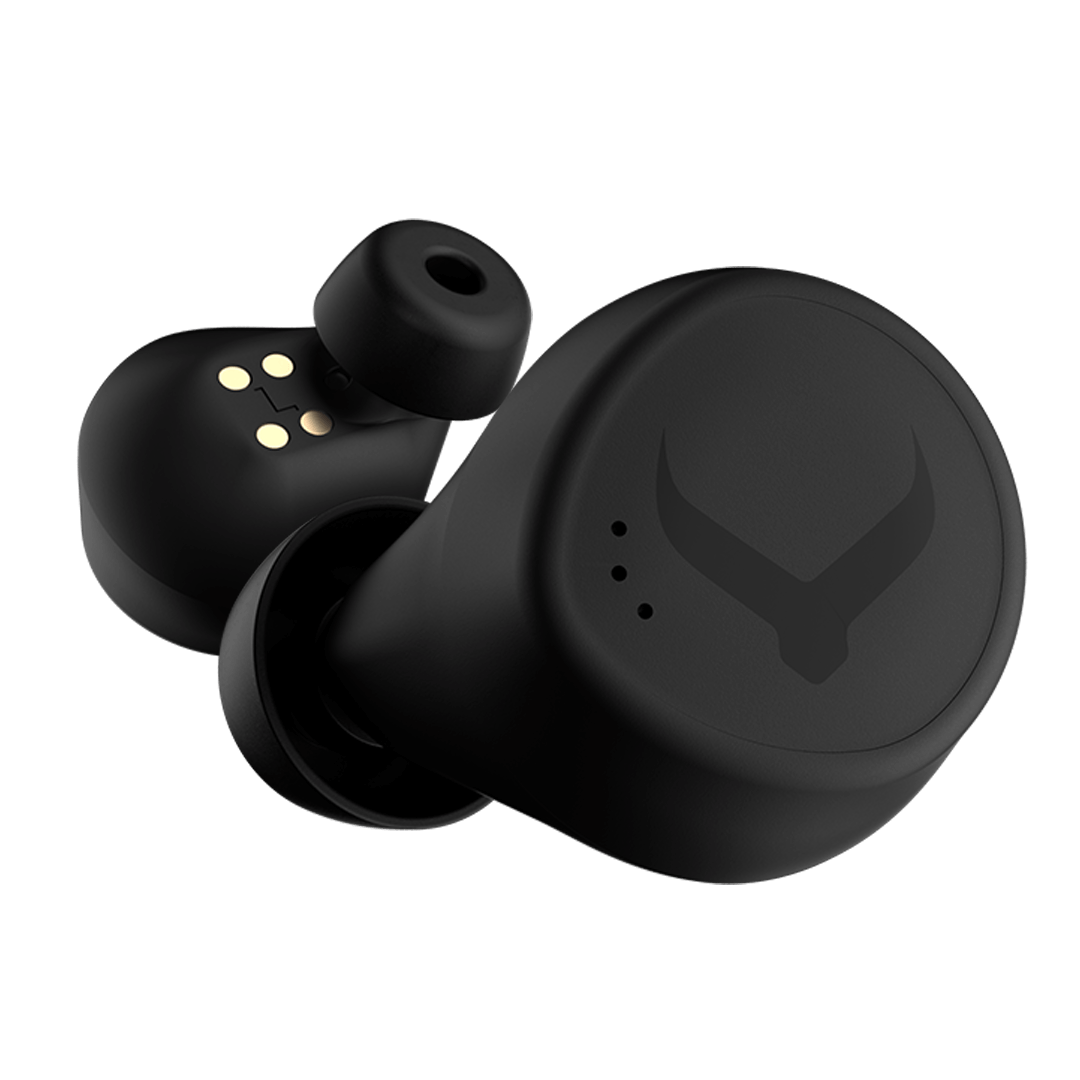
Introducing the ultimate workout earbuds.























.jpg)


.jpg)





.avif)
.avif)