Bone Conduction vs In-Ear Earbuds for Functional Fitness
Walk into any HYROX event village and you will see two camps: one wearing open-ear bone conduction bands, the other wearing in-ear buds. Both will tell you their choice is obviously correct. They are answering different questions. This guide covers how each format works, where bone conduction genuinely wins, where it loses, and an honest verdict by use case, including where in-ear is the wrong choice.


Walk into any HYROX event village and you will see two camps. One is wearing open-ear bone conduction bands. The other is wearing in-ear buds. Both will tell you their choice is obviously correct.
They are answering different questions. Here is the honest version, including where in-ear loses.
How the two formats actually work
In-ear earbuds sit in the ear canal and move air. A driver pushes a diaphragm, the diaphragm pressurises the sealed volume in front of your eardrum, and you hear it. The seal is what gives you bass and isolation.
Bone conduction transducers sit on the cheekbone in front of the ear and vibrate your skull. The vibration reaches the cochlea directly, bypassing the ear canal and eardrum. Your ears stay completely open.
That single structural difference explains every trade-off below.
Where bone conduction wins
Situational awareness
Your ear canals are open, so you hear the coach, the traffic, the person coming up on your shoulder. For outdoor running on roads, this is a genuine safety argument rather than a marketing one. For a coached class where you need cues, it is a practical one.
No ear fatigue on long sessions
There is nothing in your ear canal. On a three or four hour session, that matters. In-ear users often report pressure or itch after two hours, particularly in heat.
Nothing to fall out
The band wraps behind the head. It is not going anywhere during burpees, and there is no small object to lose on a gym floor. For athletes who have lost buds, this alone often decides it.
Compatible with wet ears
Swimmers and open water athletes get a format that works when an in-ear seal would not.
Where bone conduction loses
Bass, and therefore drive
This is not a preference argument, it is physics. Bone conduction is poor at transmitting low frequencies through skull tissue. Below roughly 100Hz output falls away sharply. The kick drum and bassline that carry the tempo of most training music are exactly what you lose. Many athletes describe the sound as thin, and on a heavy set that thinness costs you something real. Our piece on how music boosts performance explains why rhythmic and low frequency content is doing the work.
Isolation, in a loud gym
Open ears means you hear the gym. In a box with a sound system running and thirty people working, you are competing with 85 to 95dB of ambient noise. Turning the volume up on a bone conduction unit increases vibration, which becomes tickle and then discomfort against the cheekbone, and it still does not restore the bass.
Volume ceiling and leakage
Bone conduction leaks audibly at high volume. In a quiet gym at 6am, the person next to you can hear your playlist.
Glasses, hats and helmets
The transducer needs firm contact on the cheekbone. Sunglasses arms, a cap band or a helmet strap all compete for that space.
They are not automatically more durable
A common assumption is that open-ear means tougher. In practice the band is a large flexible structure with a hinge and a battery in one arm, and the units are typically rated IP55 or IP67 rather than IP68. Dropping a band is less common, but sweat ingress at the transducer boundary is a well documented failure point. Our guide to waterproof earbuds for training explains what those ratings actually cover.
Where in-ear wins
Sound that supports effort
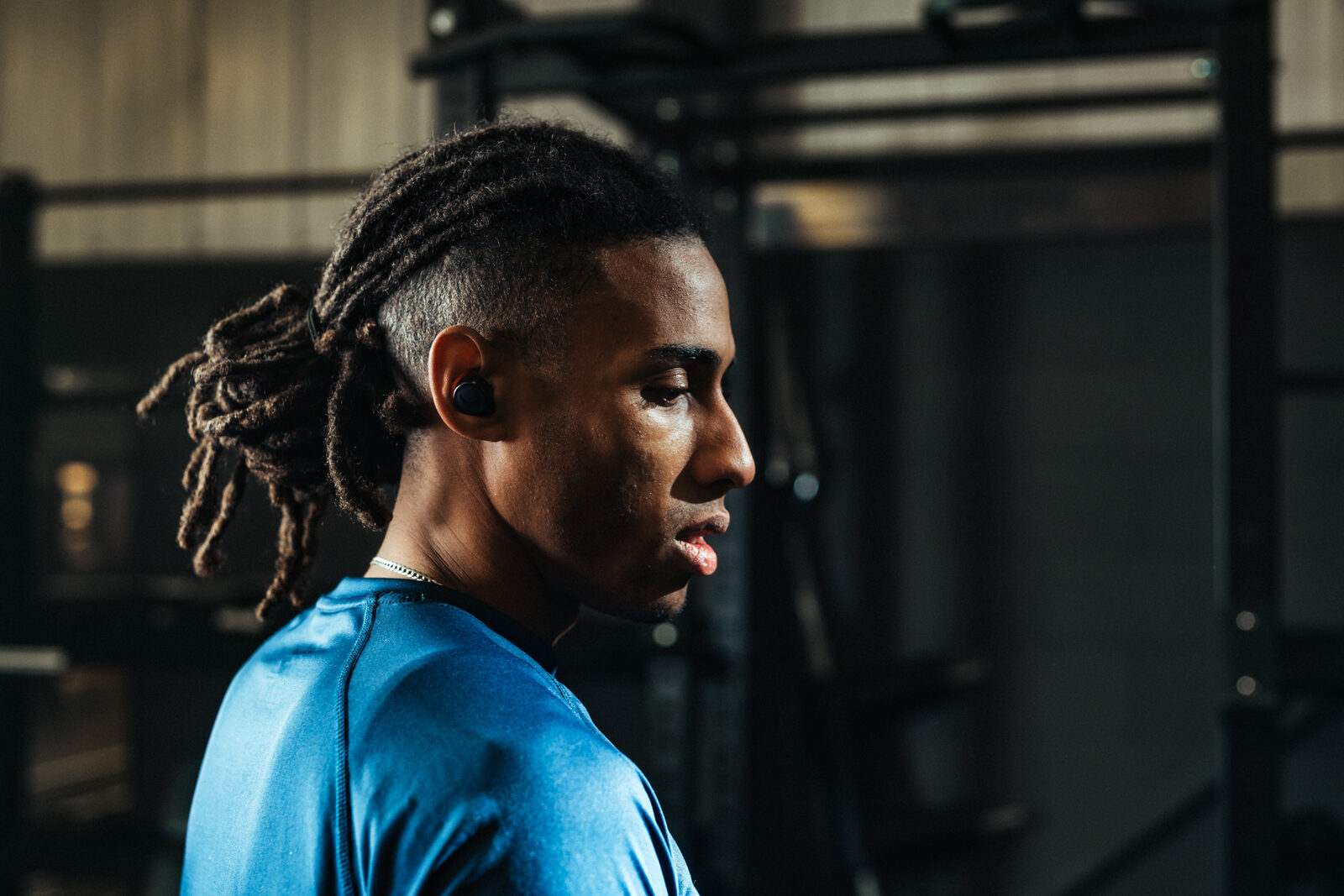
Full frequency response, including the low end that carries tempo. If you build sessions around BPM, as in our training playlist BPM guide, the format needs to reproduce the beat you are pacing to.
Isolation when you want to disappear
There are sessions where hearing the room helps and sessions where it does not. A hard interval set on a rower, or the last twenty minutes of a long grind, benefit from being able to shut the room out. In-ear with active noise cancellation gives you that option. Hear-through mode gives you the coach back when you want it.
Offline storage
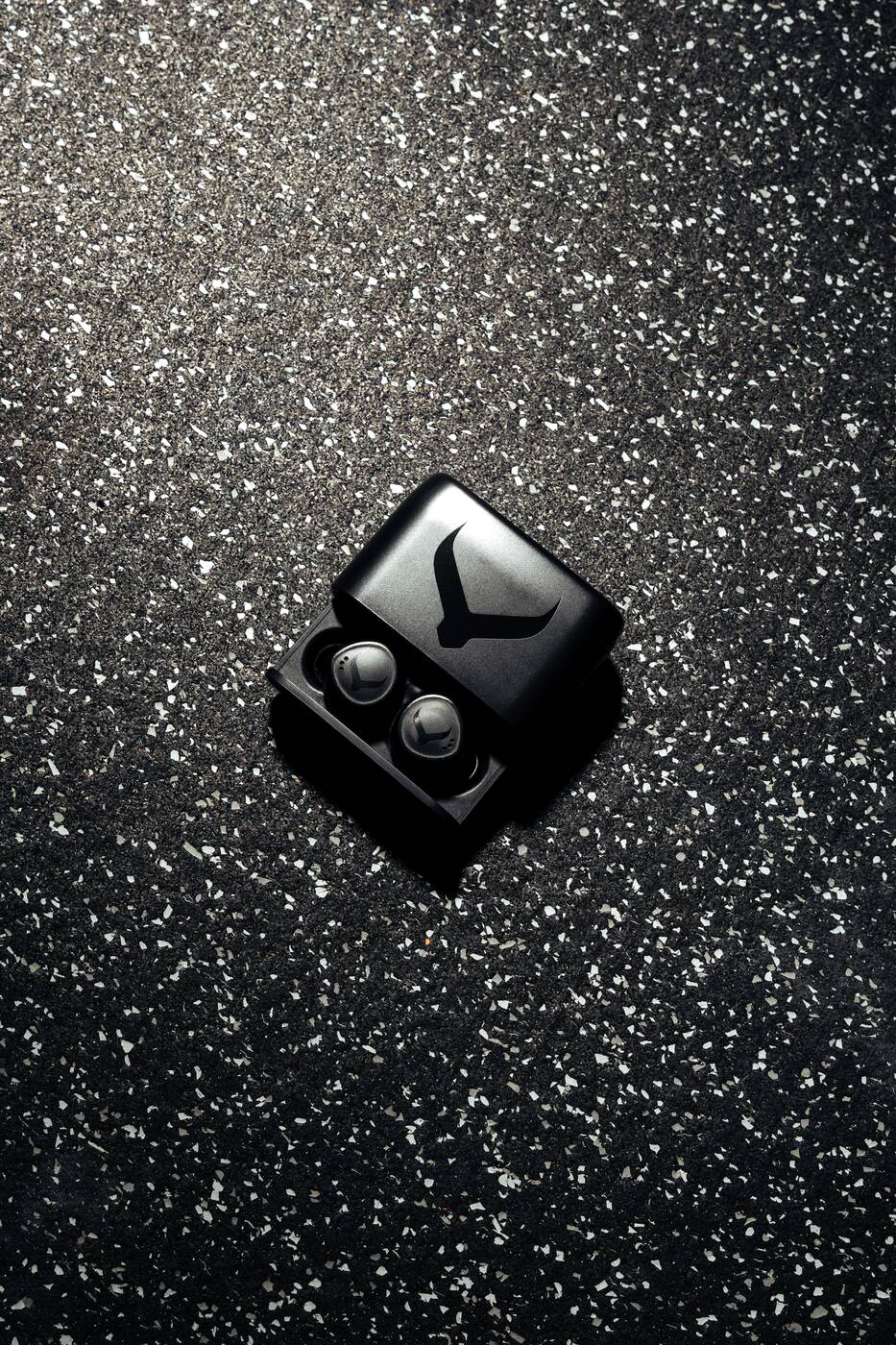
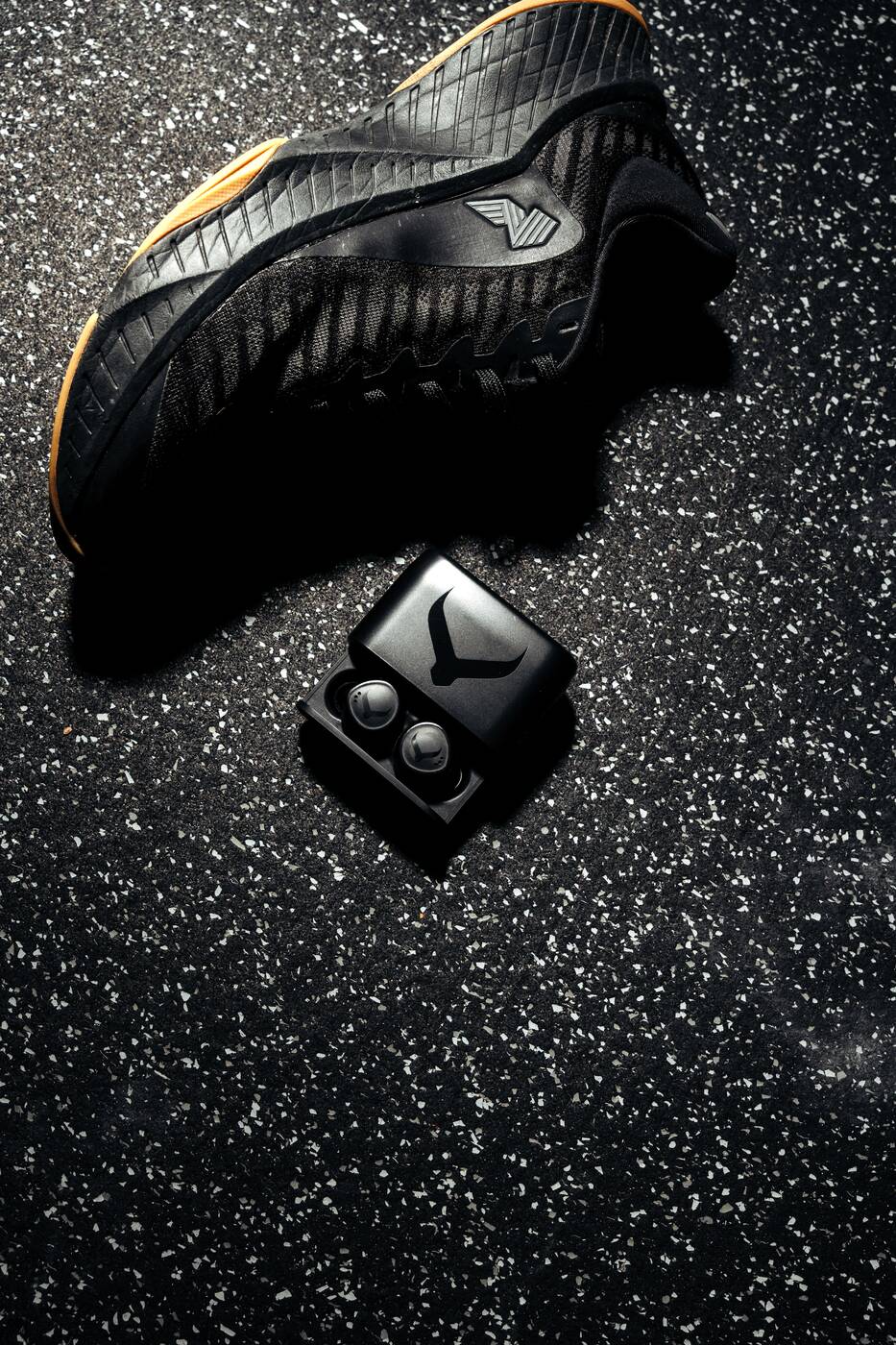
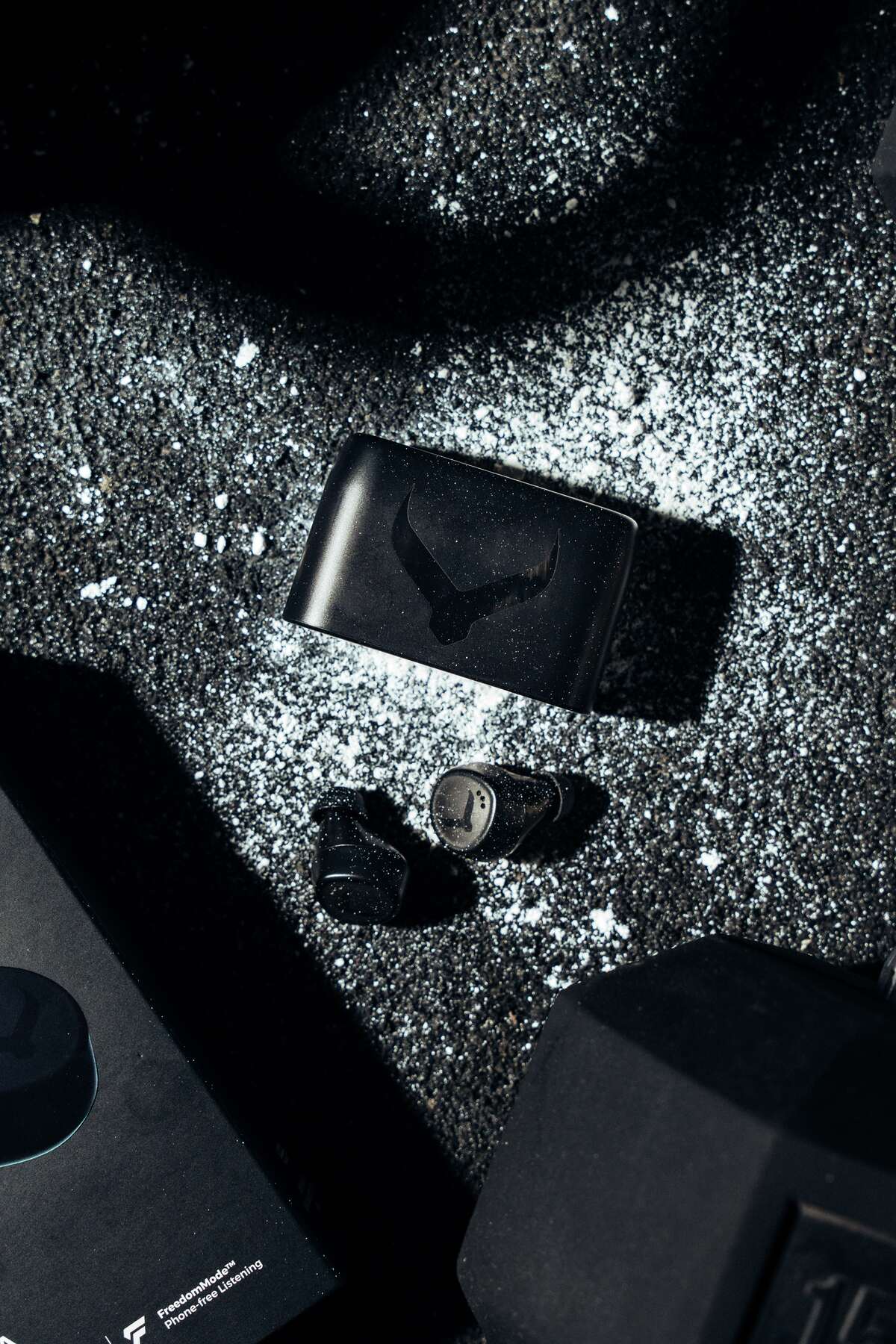
This is the specification most people do not know to look for. Bone conduction bands with onboard memory exist, but they are a small subset. The TZ7 Ultra is a pair of phone-free workout earbuds holding around 1,000 songs on 4GB, so your phone stays in the locker. That is FreedomMode, and it is why we are the only true wireless earbud with both onboard storage and Bluetooth.
Sealed, small, protectable
A small sealed object is easier to make genuinely waterproof and impact resistant than a large one with a hinge. IP68 with patented impact resistance is achievable in an earbud in a way it is not in a band.
The honest verdict, by use case
- Road running, traffic present: Better choice: Bone conduction. Why: Safety awareness outweighs sound quality
- Coached CrossFit class: Better choice: Either, in-ear with hear-through preferred. Why: You need cues, and you also need drive
- HYROX race day: Better choice: In-ear. Why: Isolation and drive matter, and the course is controlled
- Long zone 2 outdoors: Better choice: Bone conduction. Why: Comfort over hours, awareness on paths
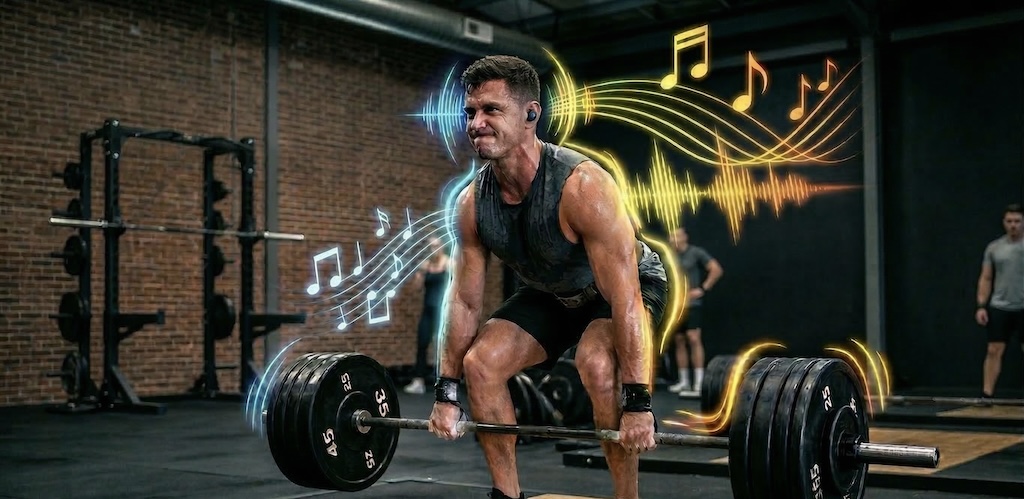
- Heavy lifting session: Better choice: In-ear. Why: Bass and isolation directly support arousal
- Swimming: Better choice: Bone conduction. Why: In-ear seal is unreliable when wet
- Trail running solo: Better choice: Either. Why: Personal preference on awareness
- Gym with loud house music: Better choice: In-ear. Why: Bone conduction cannot compete with ambient noise
What most people actually need
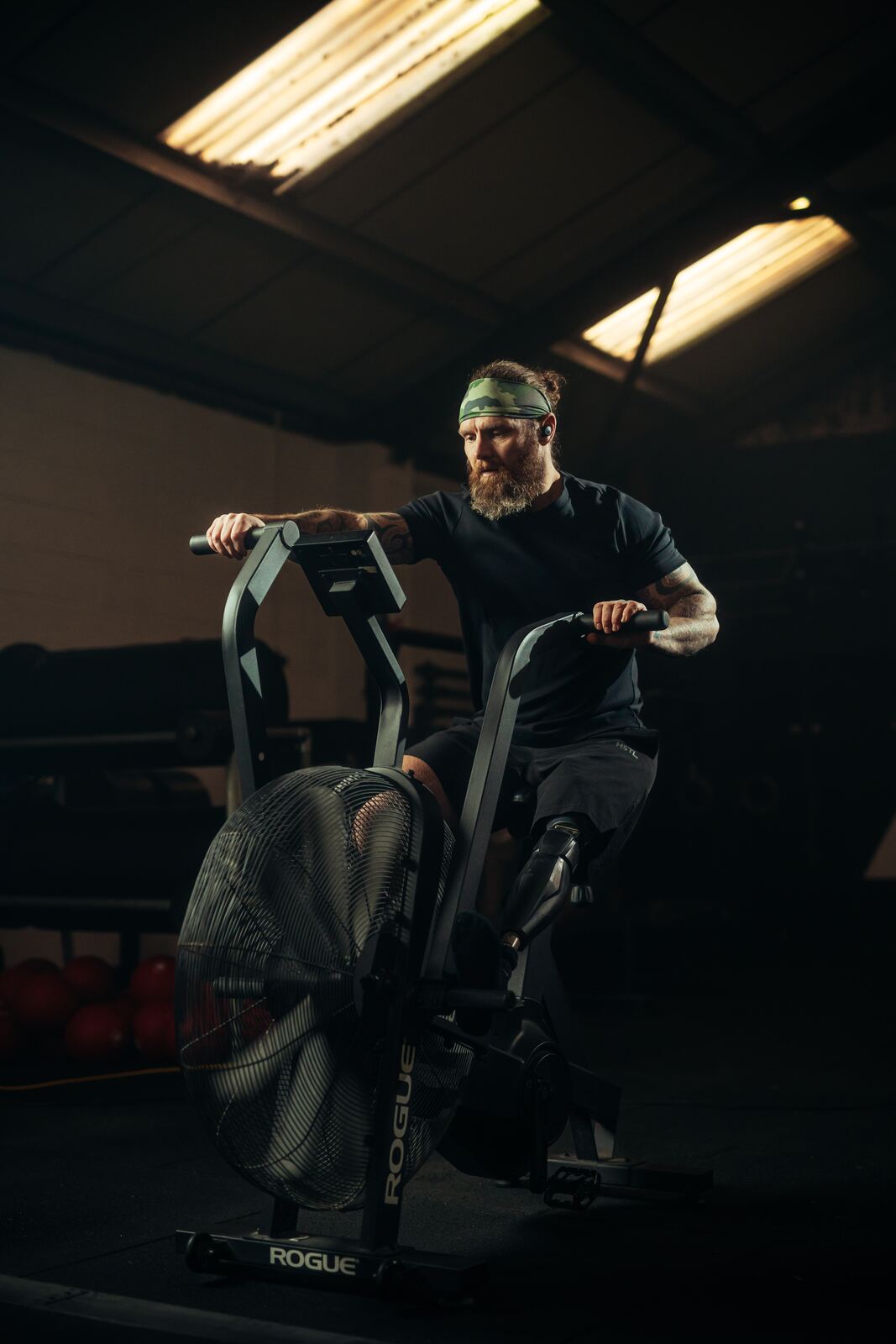
Most functional fitness athletes are not doing road running as their primary modality. They are training indoors, in a loud room, with coached elements, and they want drive during work intervals and awareness between them.
That profile points to in-ear with a good hear-through mode, which gives you both states on demand rather than committing you to one permanently. The exception is genuine road runners, where the safety argument for open ears is real and should win.
If you are choosing for a box specifically, our guide to CrossFit earbuds covers the durability side in more detail.
FAQ
Is bone conduction bad for your hearing?
No, and it is not automatically safer either. It bypasses the eardrum but still stimulates the cochlea, so the same volume exposure limits apply. The open format does mean people tend to run higher volumes to overcome ambient noise, which is worth being aware of.
Can you hear bone conduction properly in a loud gym?
Not well. Ambient noise in a busy box regularly exceeds 85dB, and with open ears that noise reaches you unattenuated. This is the single most common complaint from athletes who switch.
What are the best earbuds for high intensity training?
For high intensity work indoors, in-ear wins on every axis that matters: bass to carry tempo, isolation against gym noise, and a sealed body that is easier to make impact resistant. Open-ear formats are the better answer only when awareness of your surroundings is a safety requirement.
Do bone conduction headphones work with earplugs?
Yes, and it is a genuinely good trick. Plugs block ambient noise while the transducer still reaches the cochlea through bone, which restores perceived bass considerably. It also removes the awareness benefit you bought them for.
Which is better for HYROX?
In-ear, for most athletes. The course is closed, awareness is less critical, and you want drive on the run legs and isolation on the stations. See our HYROX earbuds guide.
Are open-ear earbuds the same as bone conduction?
No. Open-ear air conduction buds sit near the ear and move air without sealing the canal. They have better bass than bone conduction and worse isolation than in-ear. They are a third category worth knowing about.
If you want full-range sound, IP68 durability and 1,000 songs without your phone, the TZ7 Ultra was engineered for exactly that. Reserve yours.
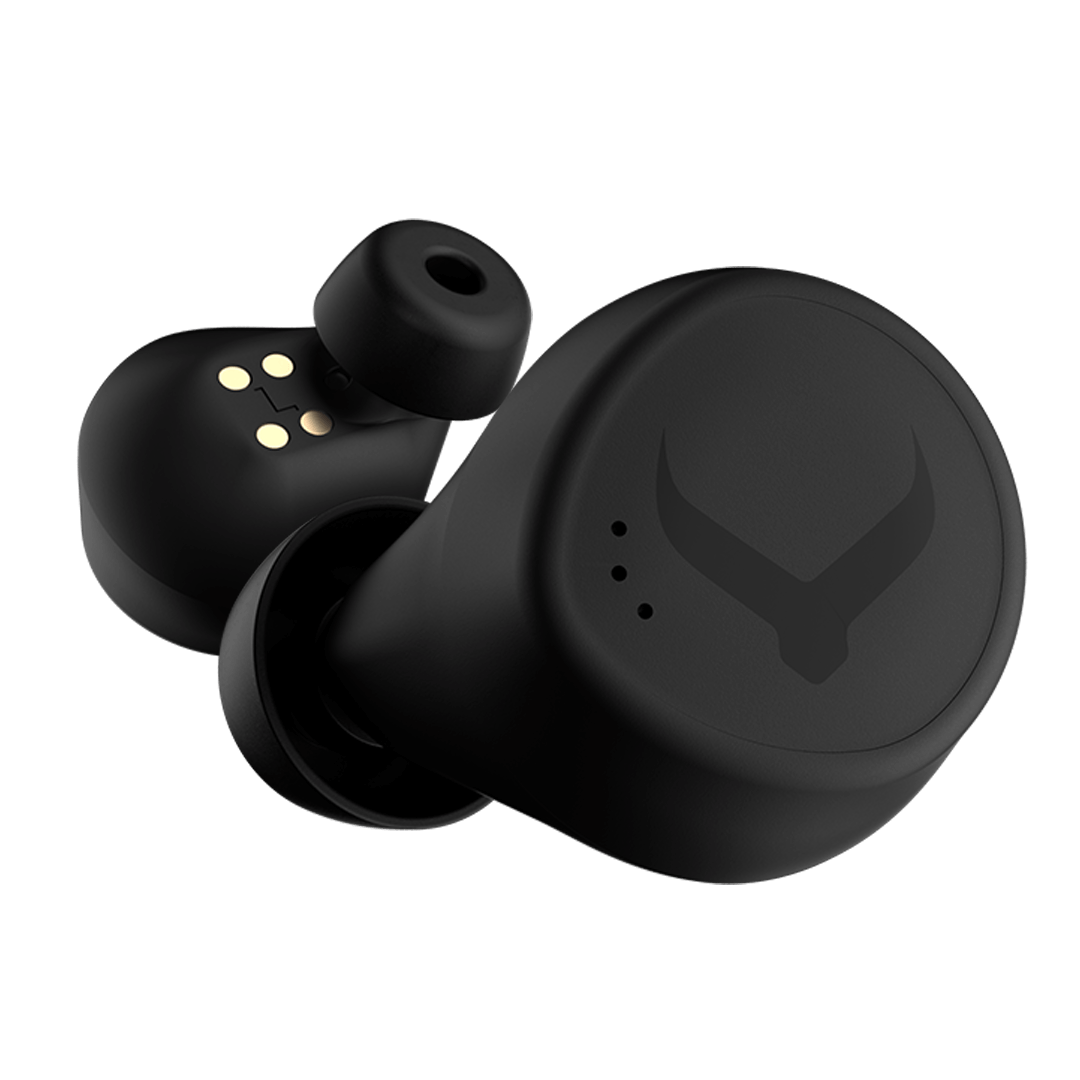
Introducing the ultimate workout earbuds.



















.jpg)


.jpg)




.avif)
.avif)