Ear Hooks, Wing Tips or Plain Tips: Which Fit Suits High-Impact Training?
Ear hooks, wing tips and plain tips each keep an earbud in for different reasons, and each struggles with different movements. This guide explains what each design does, where it falls short in a box, and the fit check most athletes skip.
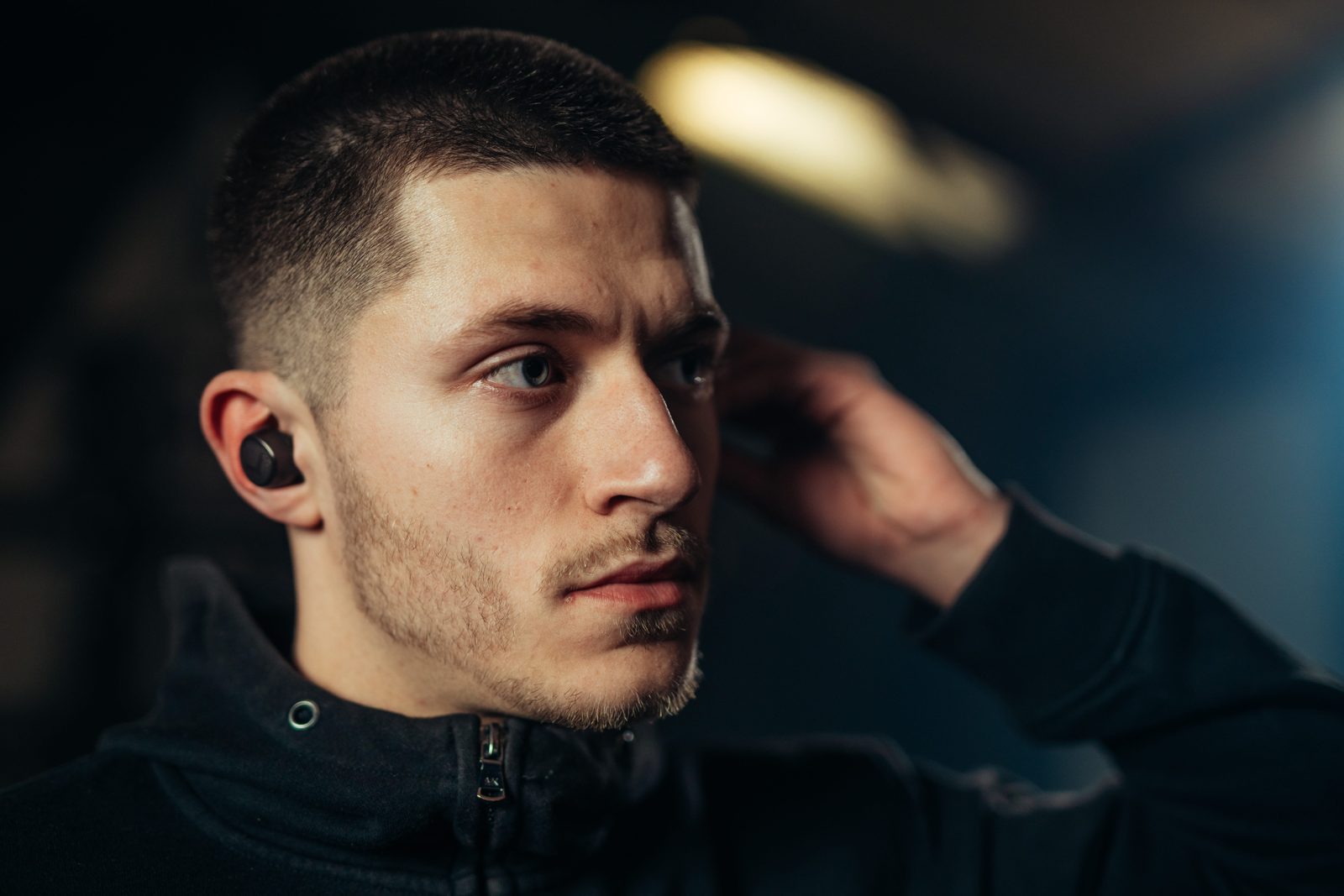

Every training earbud has to solve the same problem. Your ear is a small, soft, slightly greasy opening, and you are about to jump, drop, swing and sprint for an hour with something sitting in it. Manufacturers have three broad answers: an ear hook that wraps over the top of the ear, a wing tip (sometimes called a fin or stabiliser) that tucks into the folds of the outer ear, and a plain tip that relies on the seal in the ear canal alone.
None of them is the right answer for everyone. This guide explains what each design is actually doing, where each one struggles in a CrossFit box or on a functional fitness floor, and how to test the fit you already own before you spend money on a new pair.
What keeps an earbud in place
Three things hold an earbud in your ear, and every design leans on a different mix of them.
- The seal in the canal. A tip that fills the ear canal snugly creates friction all the way round. This is what a plain tip depends on almost entirely.
- Bracing against the outer ear. The concha (the bowl just outside the canal) and the ridges around it give a wing or fin something to push against, so the bud cannot rotate out.
- Anchoring over the ear. A hook transfers some of the weight and leverage to the top of the ear, so the bud is held from outside rather than only from within.
The forces trying to remove it are just as predictable: vertical jolts on landings, rotation when you turn your head quickly, sweat reducing friction, and contact. That last one is the one people forget. A barbell racked on the front of the shoulders, a hoodie pulled over the head, a rope sliding past the face on a climb, a wall ball caught close to the head: all of these can knock a bud that was perfectly secure a second earlier.
Ear hooks: secure, with trade-offs
A hook is the most mechanically obvious solution. If the bud starts to drop, the hook catches it before it falls. For long runs and steady cardio, many athletes find hooks reassuring.
In a box, the trade-offs show up quickly.
- Contact points. A hook sits exactly where a barbell, a medicine ball or your own forearm passes during front squats, cleans, thrusters and wall balls. Anything that catches the hook levers the whole earbud.
- Glasses and headbands. Hooks compete for space with glasses arms and some headbands, which can push the bud out of position or create pressure points.
- Bulk in the case and the bag. Hooked designs tend to need larger cases, and the hook itself is one more part that can bend or snap when kit is thrown into a gym bag.
- Comfort over time. Some people find the pressure on top of the ear fine for 30 minutes and irritating after 90.
Hooks suit athletes who mostly run, row and ride, who do not wear glasses, and who rarely bring anything up to the face.
Wing tips: the middle ground
Wing tips try to get most of the security of a hook without anything outside the ear. A soft fin locks into the upper part of the concha so the bud cannot twist free.
Done well, this is a strong option for mixed training because nothing protrudes for a bar or ball to catch. The catches are about anatomy and wear.
- Ear shape matters more than with any other design. Outer ears vary far more than ear canals. A wing that locks perfectly into one person's ear presses on a sensitive spot in another.
- Silicone fatigues. Wings stretch and soften with heat, sweat and repeated fitting. A wing that held well six months ago may be doing very little now.
- Fiddly in a hurry. Seating a winged bud properly takes a twist and a check. Mid-workout with chalky fingers, people often push it in rather than rotating it into place, which loses most of the benefit.
Wing tips suit people whose ears happen to match the wing shape, and who are willing to replace the wings when they lose their grip.
Plain tips: simple, and dependent on sizing
A plain tip has nothing outside the canal at all. That makes it the cleanest design for movements where things pass close to the head, and the easiest to put in and take out quickly.
The cost is that everything rides on the seal. A plain tip in the wrong size is the bud most likely to work loose on box jumps or burpees. A plain tip in the right size, inserted properly, can be very stable, because a well-sealed canal grips evenly in all directions and there is no external part for anything to catch.
Plain tips suit athletes who do a lot of barbell, gymnastics and ball work, who wear glasses or headbands, and who are prepared to spend ten minutes getting the size right once.
How the designs compare in a typical session
Think through a standard CrossFit class or a functional fitness session and the pattern is clear.
- Running and rowing: all three can work. Hooks have the most margin for error; plain tips need a good seal.
- Box jumps, burpees, double unders: repeated vertical impact. Any design works if the fit is right; a loose plain tip shows up here first.
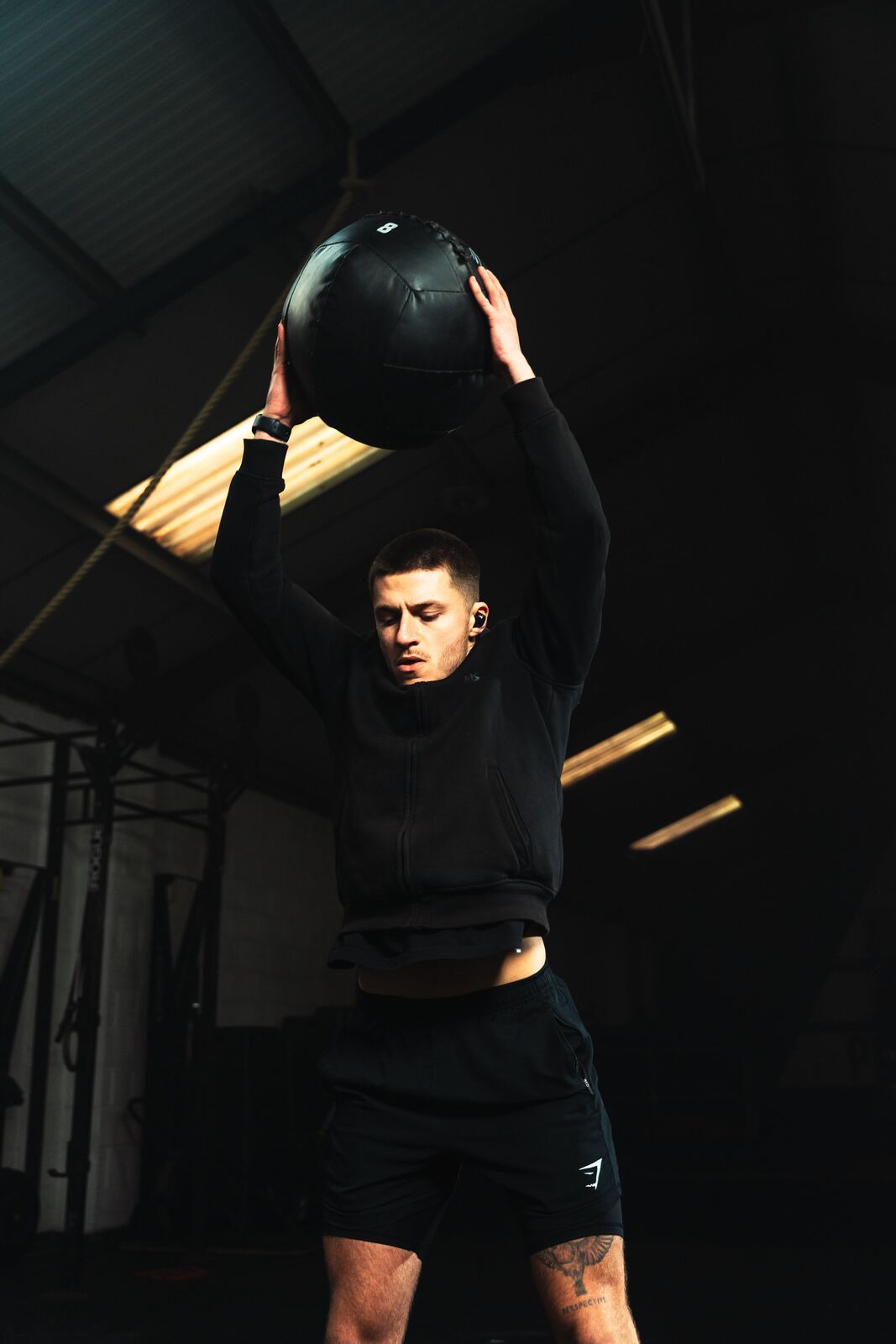
- Cleans, front squats, thrusters, wall balls: the bar or ball passes the side of the head. Hooks are most exposed; wings and plain tips have less to catch.
- Rope climbs, toes to bar, handstand work: inversions and rope contact. Low-profile designs fare better.
- Kit changes: pulling a hoodie or jumper over the head is a common way to lose any earbud. Take them out first.
The fit check most athletes skip
Most people use whatever tip came fitted in the box. That is usually the medium size, which fits many people reasonably well. Reasonably well is not good enough for a box jump. Before you blame the design, run this check.
- Try every size, both ears. Plenty of people need a different size in each ear. Start one size up from what feels comfortable and work down.
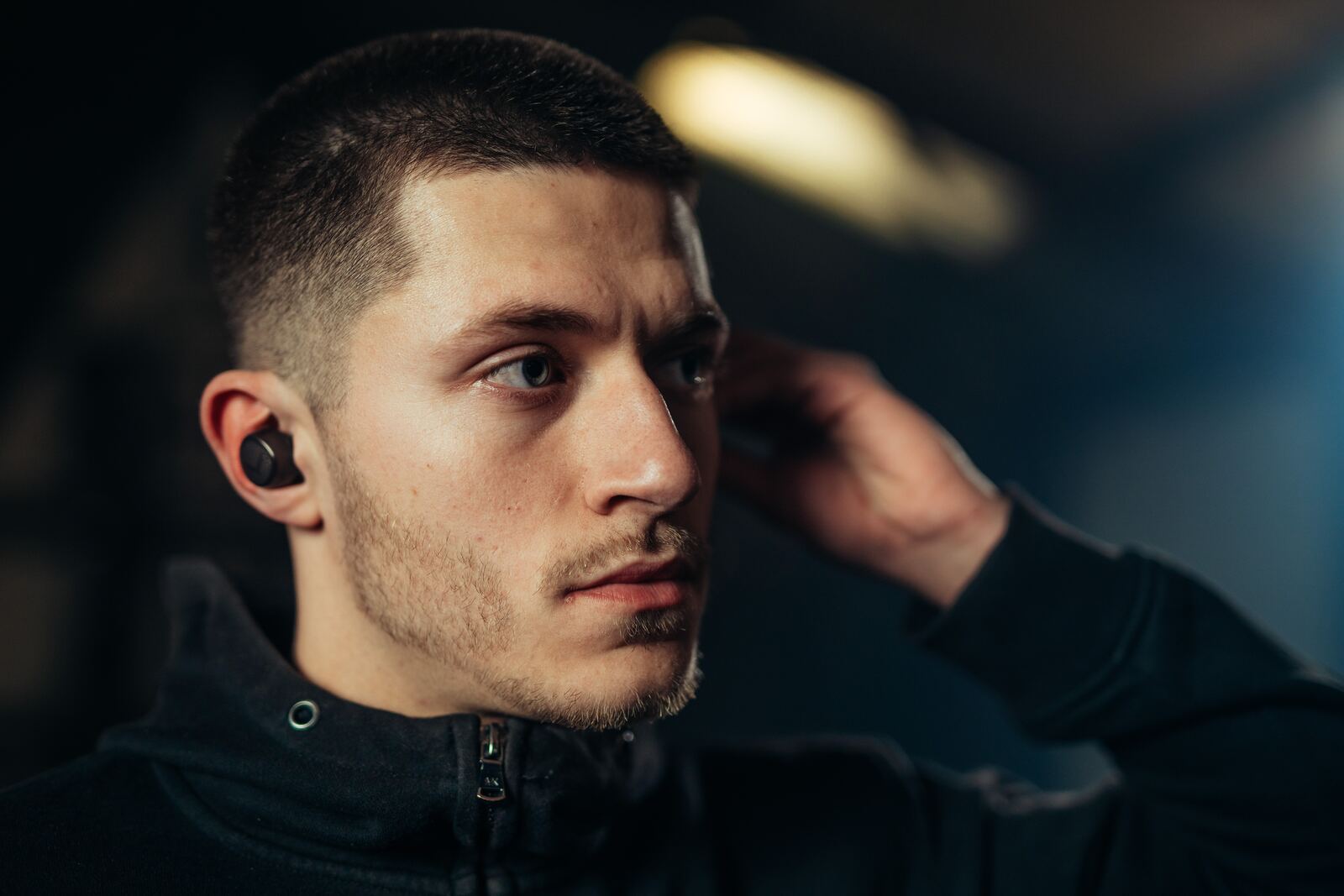
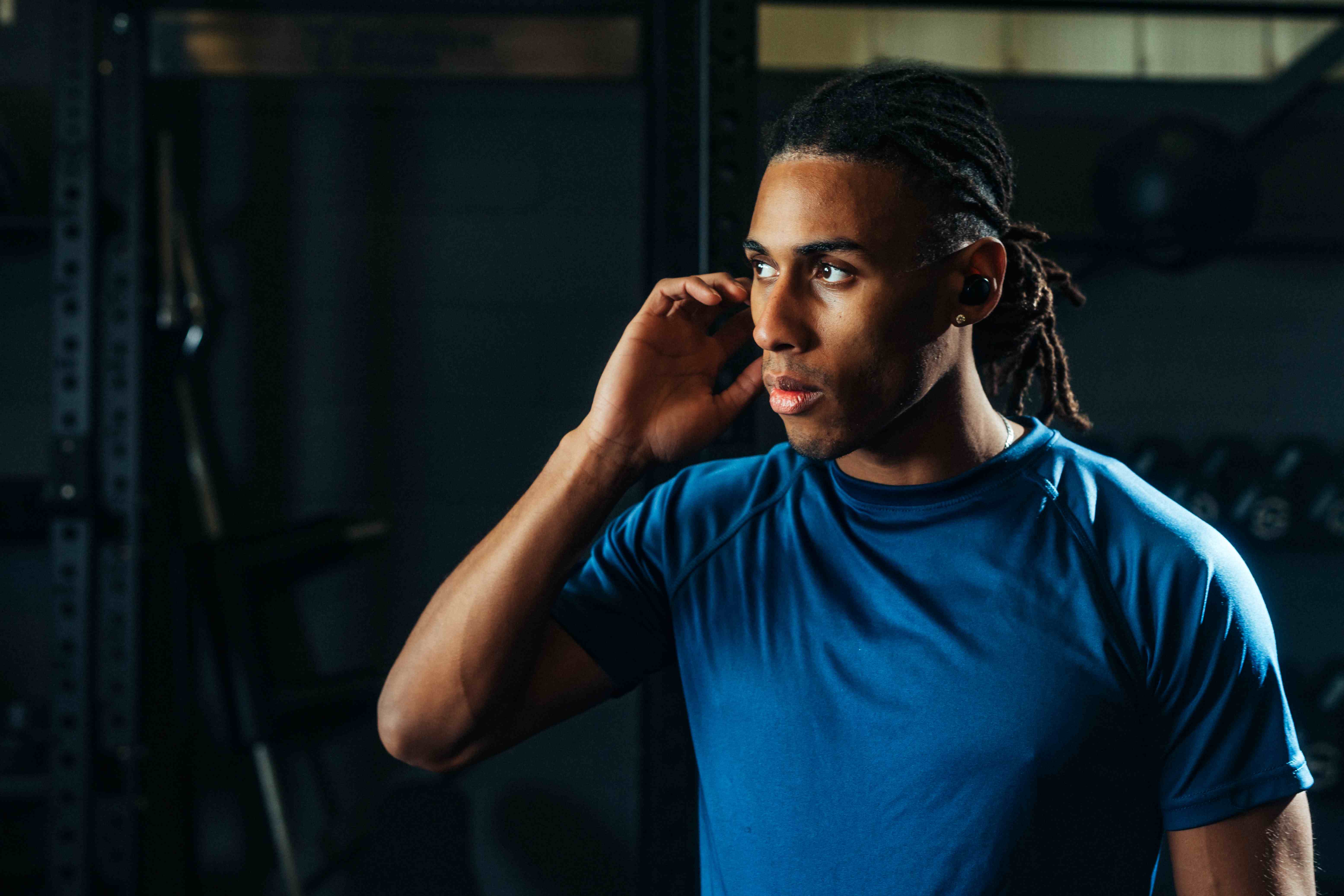
- Insert properly. Gently pull the top of your ear up and back with the opposite hand to straighten the canal, insert the bud, then let go. With a wing, rotate it back until it locks.
- Listen for the seal. With music playing quietly, the bass should sound full. If it sounds thin, or gets fuller when you press the bud in with a finger, the seal is not right.
- Do the movement test. Ten jumping jacks, ten fast head turns, five burpees and a quick jaw stretch (open your mouth wide twice). If you feel the bud move, change size or insertion before you change earbuds.
- Repeat when sweaty. A fit that holds dry may not hold 20 minutes in. Run the same test halfway through a session.
Keep a note of what works. It is easy to swap tips over for a family member or after cleaning and forget which size you settled on.
Habits that keep any earbud in
- Wipe your ears and the tips before you start. Skin oil and old sweat reduce friction from the first rep.
- Replace tips when they lose their bounce. Silicone and foam tips are consumables. If they have stopped springing back or have discoloured, they are not gripping as they did.
- Take them out for contact. If a workout involves a partner carry or anything close to the head, a 30 second pause to remove them saves a lost bud.
- Do not chase the fit with volume. If you are turning the music up to compensate for a poor seal, fix the seal. It is better for your hearing and the bud will be more secure.
Fit is also only half of the problem. A bud that stays in but cannot cope with sweat and knocks still lets you down, which is the subject of why your earbuds keep breaking. If you are still deciding between in-ear and open designs, our guide to bone conduction versus in-ear earbuds covers the other route.
So which should you choose?
A rough rule for high-impact training:
- Choose hooks if your training is mostly running and machines, and nothing comes near your head.
- Choose wing tips if your ears suit them and you want extra security without anything outside the ear.
- Choose plain tips if you do a lot of barbell, ball and gymnastics work, wear glasses, and are willing to size them properly.
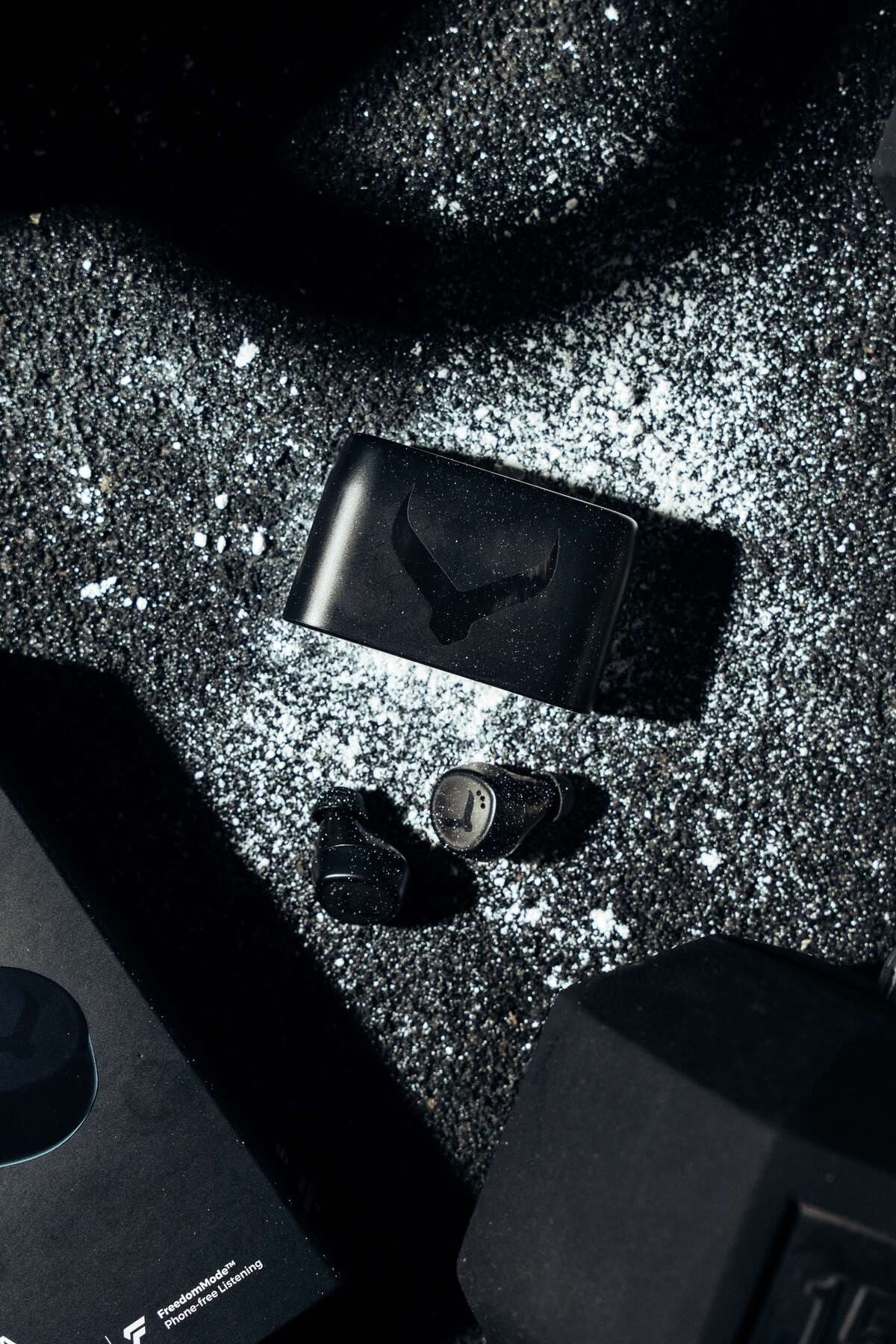
Whichever you pick, judge it in the session you actually do, not in the shop. A pair is only as good as the last workout it stayed in for. Our guide to CrossFit earbuds covers the other things to check before buying, and you can see how we built the TZ7 Ultra for the gym floor, including its IP68 rating, waterproof to 2m.
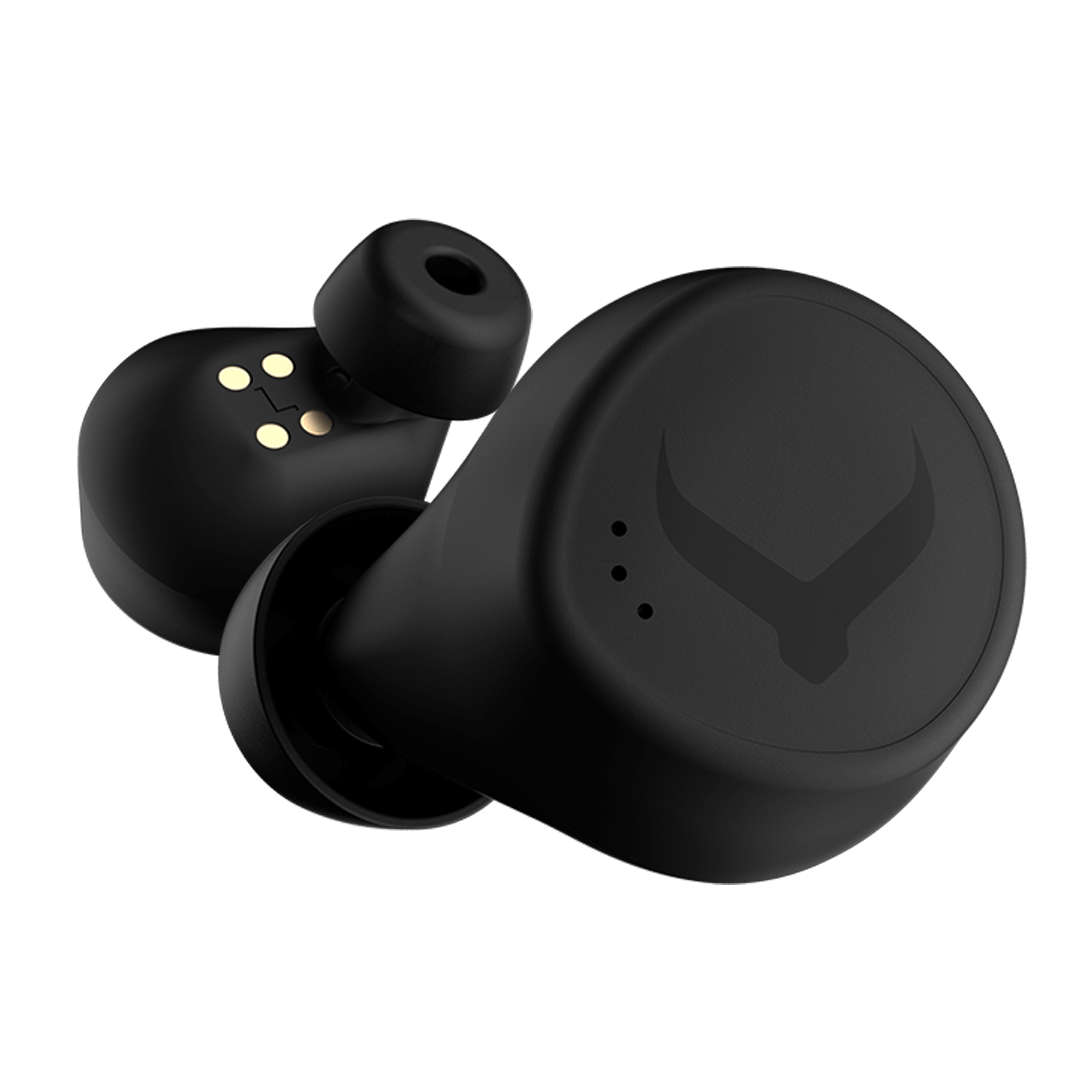
Introducing the ultimate workout earbuds.